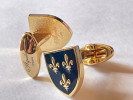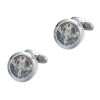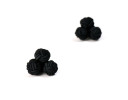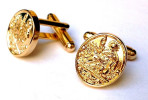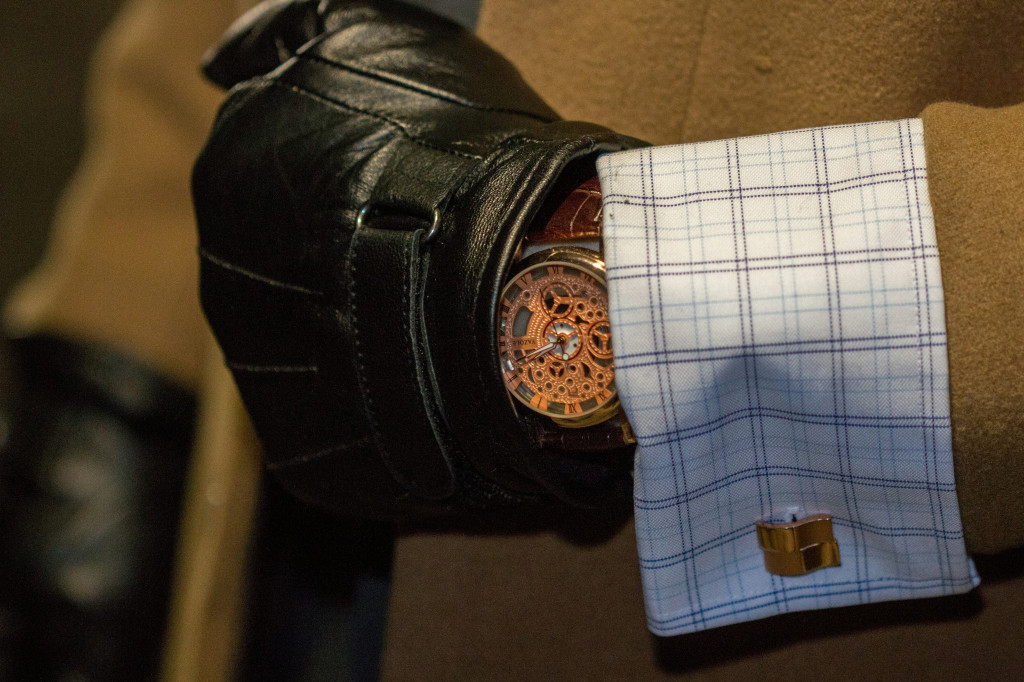
Cufflinks have a misleading reputation: people assume they are for insiders only, when in fact they follow a handful of simple rules. Slip-ups rarely come from the cufflinks themselves, but from everything around them: the shirt, the way the cuff is folded, the length of the sleeve, the occasion. Here are the ten mistakes we see most often, and how to avoid them without spending all morning in front of the mirror.
1. Wearing cufflinks with a shirt that isn't made for them
This is the mistake at the very start, and it dooms everything else. A cufflink slips through buttonholes on either side of the cuff. A standard shirt with a single buttoned cuff has just one buttonhole and a sewn-on button: there is no neat way to fit a pair, and forcing it damages the fabric.
What you need is a shirt with French cuffs (also called double cuffs), where the cuff is twice as long and folds back on itself. There are also convertible cuffs, which have both a sewn-on button and two buttonholes, so they work either way. If in doubt, look at the cuff: if there is only one buttonhole, move on. Our guide Which shirt to wear with cufflinks? explains the different cuffs, and we offer a few French cuff shirts.
2. Folding the cuff the wrong way
A French cuff folds back outwards so that all four buttonholes line up. The two edges of the cuff then meet face to face, in a “kissing” position, like two hands pressed together, and the cufflink passes through them all. The classic mistake is to overlap the edges as on an ordinary shirt: the cuff twists, the cufflink tips over and the whole thing looks sloppy.
If you are new to this, our step-by-step guide How to put on cufflinks walks you through each stage. A tip: if you are right-handed, fasten the left cuff first, before you put your jacket on.
3. Putting the cufflink in back to front
The decorated face goes on the outside, the side people see when your arms hang by your sides. The fastening (swivel, bullet back, chain or ball) stays on the inside of the cuff. A pair fitted back to front does not always get noticed, but when it does, it is all anyone sees.
4. Choosing a design that has nothing to do with the occasion
Cufflinks send a message. Very playful designs at a funeral or an important meeting can seem out of place; on the other hand, a dull pair at a wedding lacks a little panache. A few pointers:
- Ceremonies, formal evenings, black tie: restraint above all. Mother-of-pearl, onyx, polished metal, simple shapes (round, square).
- The office, business meetings: discreet designs, plain or lightly patterned, that complement the outfit without commenting on it.
- Weddings: elegance comes first, with room for a wink as long as it stays discreet.
- Dinner with friends, parties, weekends: this is the moment for quirky designs that raise a smile and get the conversation going.
For serious occasions, our selection of classic cufflinks takes the guesswork out of it.
5. Mixing your metals
Cufflinks belong to the “metals” of an outfit, along with your watch case, belt buckle, tie bar and wedding ring. It is not an absolute rule, but sticking to a single tone, silver or gold, instantly gives an impression of harmony. A steel watch with gold cufflinks and a copper belt buckle sends three messages from a single wrist.
6. A shirt sleeve that is invisible… or far too visible
A cufflink only exists if it can be seen. Your shirt sleeve should show about 1 to 1.5 cm beyond your jacket sleeve when your arms hang by your sides. A jacket sleeve that is too long hides the cuff completely; a shirt sleeve that is too long leaves it flapping over your hand. A simple alteration to the jacket sleeve by a tailor often solves the problem.
7. Piling on accessories that compete for attention
A patterned tie, a printed pocket square, novelty socks and statement cufflinks: each piece may be charming, but together they cancel each other out. Choose one focal point. If your cufflinks have character, keep the tie plain; if the tie is very busy, go for an understated pair. Our guides to matching cufflinks with your tie and matching them with your shirt offer combinations you can rely on.
8. Ignoring the size of your wrist and of the cufflink
A very large cufflink on a slim wrist overwhelms the silhouette; a tiny one on a broad wrist disappears. The usual size, around 15 to 20 mm, suits most wrists. Slim wrists look best with medium-sized round or oval shapes; our guide to cufflinks for slim wrists goes into more detail.
9. Neglecting care
A tarnished cufflink or chipped enamel shows more than you might think. A few simple habits are enough:
- wipe your cufflinks with a soft, dry cloth after each wear, especially in summer;
- for metal, use a cloth lightly dampened with warm soapy water, then dry carefully;
- no abrasive products or stiff brushes on plated finishes, enamel, mother-of-pearl or stones;
- put on perfume or eau de toilette before your cufflinks, not after.
Material-by-material advice can be found in our guide Caring for your cufflinks.
10. Storing them in a jumble
Tossed into the back of a drawer or a suit pocket, cufflinks knock against each other, get scratched and become separated. An odd cufflink is no use to anyone. A case, a box with compartments or simply a small pouch per pair will do. As your collection grows, a dedicated storage box soon becomes indispensable; see also how to store your cufflinks.
In short
A shirt with French cuffs, a cuff folded in the “kissing” position, the decorated face turned outwards, a design suited to the occasion and to the other metals you are wearing: with these five reflexes, most slip-ups disappear. The rest is a matter of taste, and that is precisely where cufflinks become interesting.
Frequently asked questions
Can you wear cufflinks with a normal shirt?
Not with a single-cuff shirt, which has only one buttonhole. You need French (double) cuffs or convertible cuffs, which have two buttonholes.
Which way round does a cufflink go?
The decorated part goes on the outside of the cuff, visible when your arms hang by your sides; the fastening stays on the inside.
Should cufflinks match your watch?
It is not compulsory, but keeping the same metal tone (silver or gold) for your watch, cufflinks and belt buckle makes for a more coherent outfit.
Are novelty cufflinks acceptable at the office?
Yes, as long as they stay discreet and the setting allows it. For a job interview or an important meeting, an understated design remains the safest choice.