

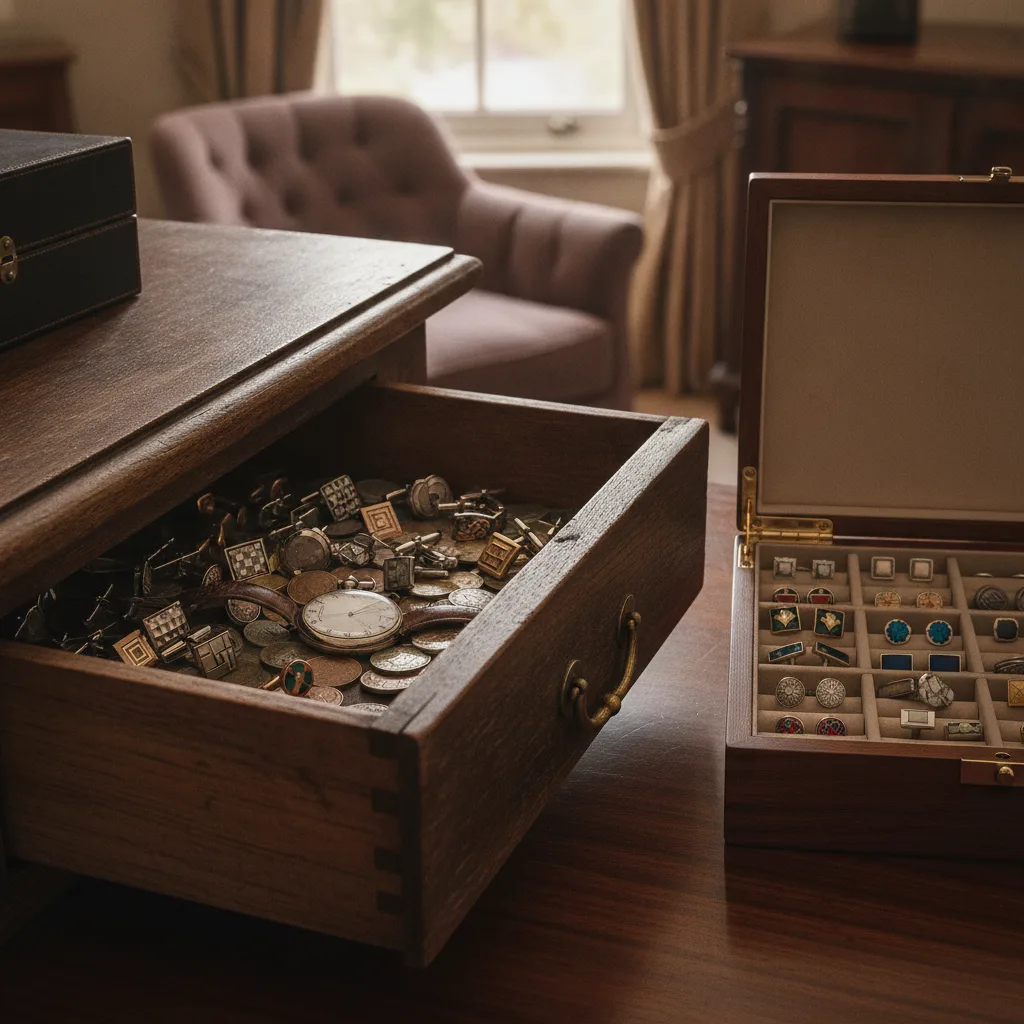
You have built up pairs over the years, received as presents, found at flea markets or carefully chosen, and they all end up in the same drawer, jumbled together with loose change and old watches. Storing your cufflinks properly is not a collector's affectation: it is what keeps their shine, their toggle mechanism and their sentimental value intact.
A badly stored pair gets scratched, tarnishes and loses its partner within a few months. In this 2026 guide, we review the storage options, from the original presentation case to the multi-tier velvet-lined box, along with the care habits that extend the life of your men's accessories.
How to store your cufflinks: a complete guide
Reading time: ~8 min
- Why storage determines how long your pairs last
- Storing cufflinks: the five basic rules
- Which cufflink storage box to choose
- Organising your cufflink collection with a clear system
- The special case of silk knots and delicate materials
- Clean before you store: the habit that prevents tarnish
- Making your own box: a credible option
- Taking cufflink storage further
- In short: storing your cufflinks well
- FAQ – Frequently asked questions about storing cufflinks
Why storage determines how long your pairs last
A cufflink is a small piece of men's jewellery exposed to three constant threats. The first is mechanical. Left loose, designs in base metal, sterling silver or gold plate knock against each other and produce criss-cross scratches, those micro-scuffs that dull the polished surface and, on plated pieces, eventually expose the brass underneath.
The second is chemical. Humidity, ambient air and traces of perfume or sweat speed up oxidation and tarnishing, especially on silver. The third is simply logistical. A separated pair is a lost pair, and nothing is more frustrating than finding a single cufflink the night before a wedding.
The care guides published by specialist houses all agree on the same three essentials: a soft fabric-lined base, an individual compartment for each pair, and a dry environment away from direct light and dust. In other words, protecting your cufflinks is less a matter of spending money than of method.
Storing cufflinks: the five basic rules
Before choosing a container, a few principles apply to every collection, whether it numbers two pairs or fifty. Here is the checklist we recommend to our customers.
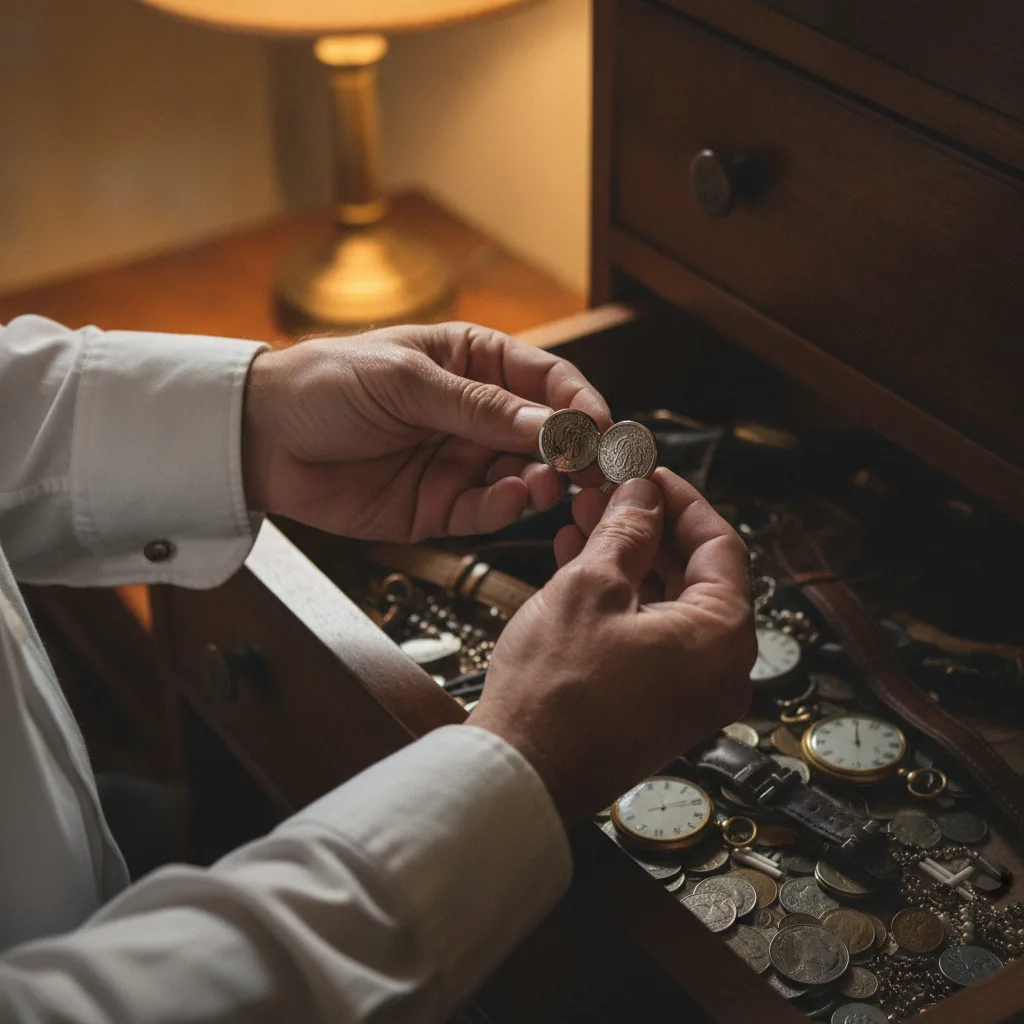
- Identify the material of each pair, because sterling silver, gold plate and silk knots do not react to time and humidity in the same way.
- Give each pair its own padded compartment, to avoid any metal-on-metal contact.
- Keep the box in a dry place, out of direct sunlight and away from the bathroom.
- Never mix cufflinks with other jewellery, rings, signet rings or tie clips, unless the box has separate sections.
- Wipe each cufflink with a soft cloth before putting it away, to remove fingerprints and residues that encourage tarnishing.
These habits take a few seconds after each wear and save you tedious polishing sessions several times a year.
Good to know
One tutorial on making a cufflink box recommends allowing at least 40 mm of internal height, so that the post and the swivel bar are never pressed against the lid.
Which cufflink storage box to choose
There is no single solution, but rather a logical progression that follows the size of your collection and how often you wear shirts with French cuffs. The original case remains the best protection for a single pair, since it was designed to the exact dimensions of the piece.
From three or four pairs onwards, individual cases become bulky and impractical, and a compartmentalised box for men's jewellery takes over. For large collections, a multi-tier box lets you spread the pairs across drawers and keep tie and cuff accessories in the same piece of furniture.
Comparing the main storage solutions
| Solution | Scratch protection | Capacity | Travel | Ideal for |
|---|---|---|---|---|
| Original case | Excellent, fitted to the piece | One pair | Good | Precious piece or treasured present |
| Fabric storage pouch | Average, no rigid dividers | A few pairs | Excellent | Holidays and business trips |
| Velvet-lined compartment box | Very good, one slot per pair | Everyday collection | Limited | Daily use on the chest of drawers |
| Multi-tier box | Very good, with separation by type | Large collection | Poor | Collectors and mixed accessories |
| Men's jewellery drawer organiser | Variable, depending on the insert used | Very large collection | None | Bespoke fitted dressing room |
| Home-made box | Good if a lining is added | Made to measure | Poor | Keen, careful DIY enthusiasts |
A velvet lining is not just decoration. It absorbs knocks, limits friction and slows the circulation of air around the metal. A wooden box with a soft fabric interior is better than a glossy but bare plastic one.
If you are looking for something to give as a present, our gift sets already bring together one or more pairs in protective packaging.
Organising your cufflink collection with a clear system
Once you have chosen the container, there remains the question of how to arrange it. Three approaches work well and combine easily. Organising by use puts the pairs you wear to the office in the front row, ceremony designs in the second, and rare or sentimental pieces at the back.
Three complementary ways to organise
Organising by metal groups silver on one side and gold plate on the other, which simplifies jewellery care since you treat each family with the same product. Finally, organising by colour appeals to those who like to coordinate with their tie and pocket square, an approach naturally reflected in our colour and shape categories.
For a large collection, the most effective principle remains rotation. Keep ten to twelve pairs within reach in the box on your chest of drawers and store the rest in a second container, kept in a dry cupboard. You reduce handling, and therefore wear, and you rediscover your pieces as the seasons change. It is also worth photographing the inside of your boxes: this makes insurance claims easier if something happens and saves opening every drawer to find a particular pair.
The special case of silk knots and delicate materials
Silk knot cufflinks, those braided balls of silk or cotton joined by a cord, follow different rules. They fear neither oxidation nor scratches, but they dislike humidity, crushing and fading in the light.
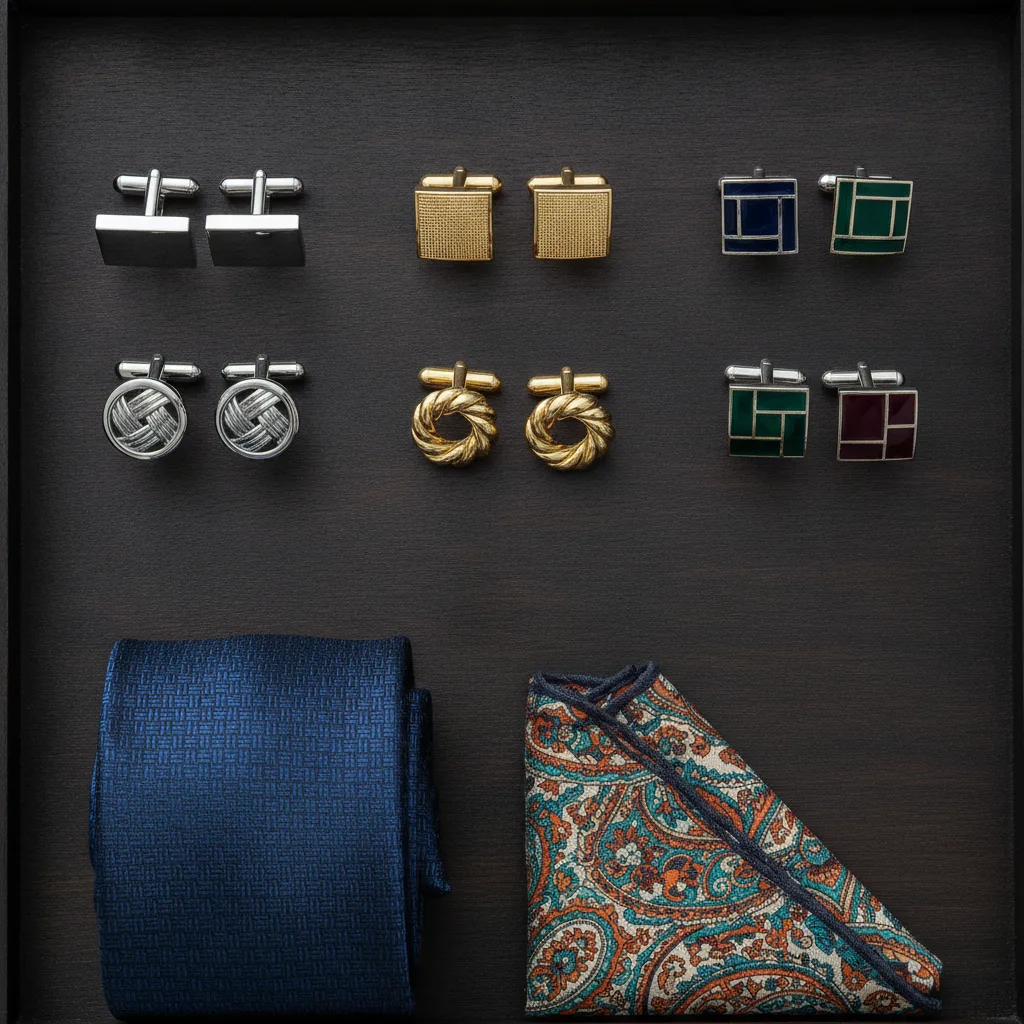
An airtight container or a simple clean glass sweet jar works perfectly, provided it is kept away from a window. The benefit is twofold: you can see them at a glance and you gain a decorative object for your chest of drawers. Our silk knot designs can be found in our shop.
The same care applies to pieces with enamel, mother-of-pearl or set stones. They do not cope well with knocks or temperature changes. An individual compartment lined with soft fabric and a stable position are enough to preserve them for the long term.
Clean before you store: the habit that prevents tarnish
Storage extends cleaning; it does not replace it. The right frequency depends on use. After each wear, a wipe with a microfibre cloth removes sweat and traces of perfume.
Every four to six wears, a more thorough clean in lukewarm, lightly soapy water, followed by careful drying, restores the metal's shine. Polishing with a chamois leather or an impregnated cloth should be kept for sterling silver that is starting to tarnish, and never used on gold plate, whose layer is thin.
To preserve precious metals, a closed container limits exposure to air and slows oxidation. Some people add a moisture-absorbing sachet to the box, a simple and effective anti-tarnish measure in older homes or damp regions. Avoid, however, prolonged contact with untreated leather, which can release sulphur compounds.
Key takeaway
A cufflink stored clean, dry and apart from its neighbours can last for decades without losing its shine, whereas a pair left loose in a drawer deteriorates within a season.
Making your own box: a credible option
DIY has its place here. A reclaimed wooden box, a foam base covered in velvet and slits cut with a craft knife to slide the posts into are all you need to create made-to-measure storage.
The idea is a flexible pierced or slotted panel into which each cufflink is pushed, with the whole tray visible at a single glance. Pay attention to the internal height, to keeping the lining in place and to a dustproof lid. This solution is particularly suited to varied collections that standard compartments struggle to accommodate.
Taking cufflink storage further
Storing your cufflinks properly comes down to three decisions: choose a lined container with compartments, adopt an arrangement that matches the way you dress, and clean each pair before putting it back. The rest is a matter of gentle discipline.
At Une Autre Paire de Manches, we see the box as the natural extension of the accessory, and our orders ship in a gift box. If your collection deserves a fresh start, our best sellers and our new arrivals are a good place to begin, as are our current offers.
In short: storing your cufflinks well
By combining a suitable box, a few simple care habits and a consistent system, you keep your cufflinks safe for the long term. The aim is not to keep them under glass, but to be able to wear them often while preserving their mechanism and their shine.
FAQ – Frequently asked questions about storing cufflinks
How do you travel with cufflinks without damaging them?
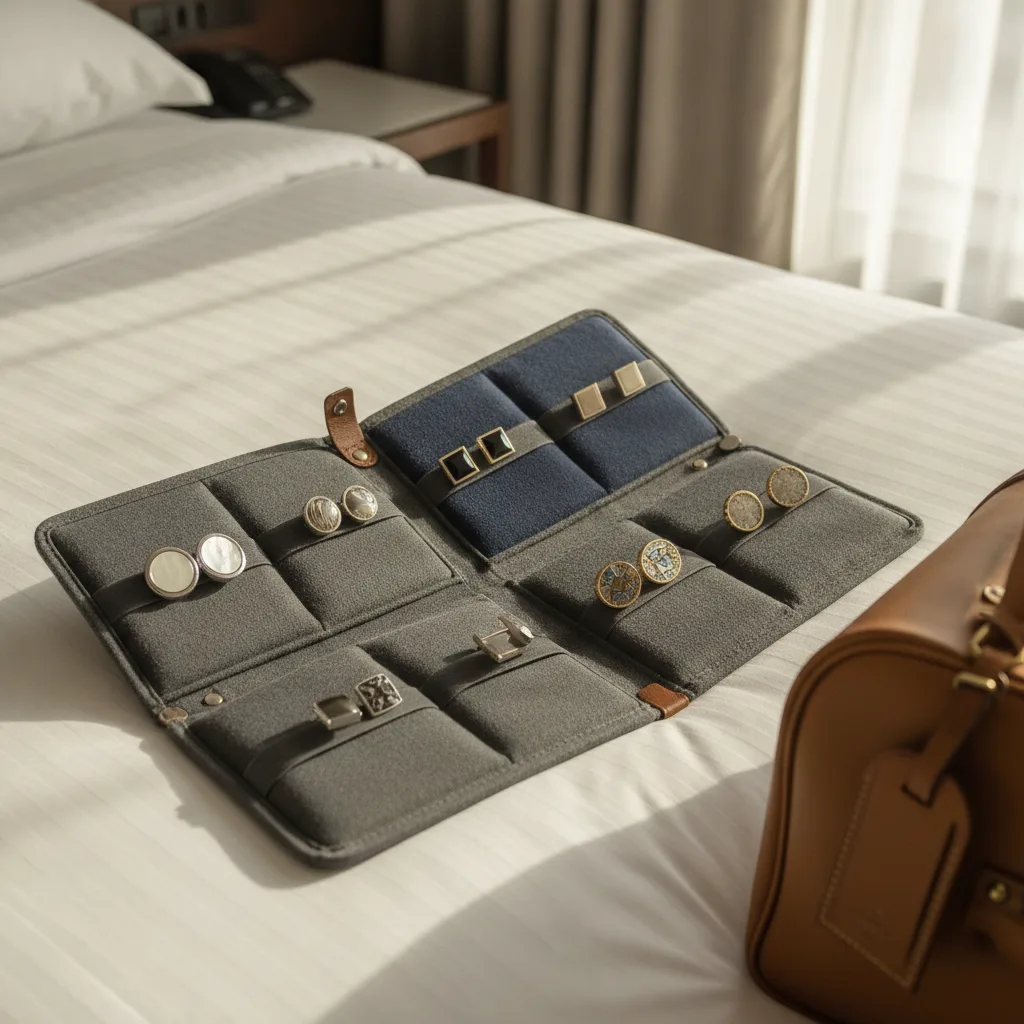
A fabric storage pouch with compartments, packed in your hand luggage rather than in your checked suitcase, remains the safest solution. Place each pair in a separate pocket and close the fastenings so that they do not snag the fabric.
Should you keep the original cases once you have bought a storage box?
Yes for valuable pieces or presents, because the original case adds to the resale value and offers ideal protection for long-term storage. For novelty designs worn often, a box with compartments is more practical day to day.
Is a leather box better than a wooden one?
Both are fine if the interior is lined with velvet or felt. Wood offers better stability against humidity, while leather travels more easily. In either case, choose one that closes fully to keep the dust out.
Can you store cufflinks with your watches?
In a multi-tier box, yes, as long as the tiers are separate. Direct contact between a metal watch strap and a gold-plated cufflink quickly causes micro-scratches that show in the light.
What should you do with an odd cufflink?
Keep the single cufflink in a dedicated compartment rather than throwing it away. Some craftspeople turn these pieces into pin badges, brooches or tie ornaments, and finding the missing partner during a thorough tidy-up happens more often than you might think.