You'd like to wear cufflinks but don't know where to start? Rest assured: there is no secret code and no knowledge reserved for insiders. In five steps, from the shirt to the right occasions, you will know everything you need to get started with confidence.
Step 1: get the right shirt
It all starts with the cuff. Cufflinks can only be worn with a shirt whose cuff has two facing buttonholes and no sewn-on button. There are two types:
- The French cuff (or double cuff): twice as long as a standard cuff, it folds back on itself before being fastened. It is the dressiest option.
- The single cuff for cufflinks: normal length, no fold, with two buttonholes. More discreet, it works well for everyday wear.
Some shirts have a convertible cuff, with a sewn-on button and a second buttonhole: they work both ways, which is ideal for trying cufflinks out. To choose well, read our guide French cuff shirts. We also offer a few French cuff shirts of our own.
Step 2: choose your first pair
The right design to start with
For a first pair, aim for versatility: a medium-sized design in silver-tone metal, round, square or rectangular, perhaps with a touch of understated colour (navy, black, mother-of-pearl). It will be as much at home in the office as at a wedding. Our selection of classic cufflinks brings these safe bets together.
The right fastening
The fastening makes a real difference day to day:
- The toggle (or swivel bar): the most common, and very easy to fasten with one hand. Ideal for beginners.
- Double-sided with no mechanism (double ball, chain link): elegant and identical on both sides, a little trickier to slip through.
- Silk knots: two knots of braided fabric joined together, supple, light and very inexpensive. Perfect for getting the hang of it, like our silk knot cufflinks.
Each system is explained in detail in our guide The different types of cufflinks.
Step 3: put them in properly
Once you have the knack, it takes less than a minute:
- Put on your shirt before your jacket, with the cuffs open.
- For a French cuff, fold the cuff back outwards so that all four buttonholes line up.
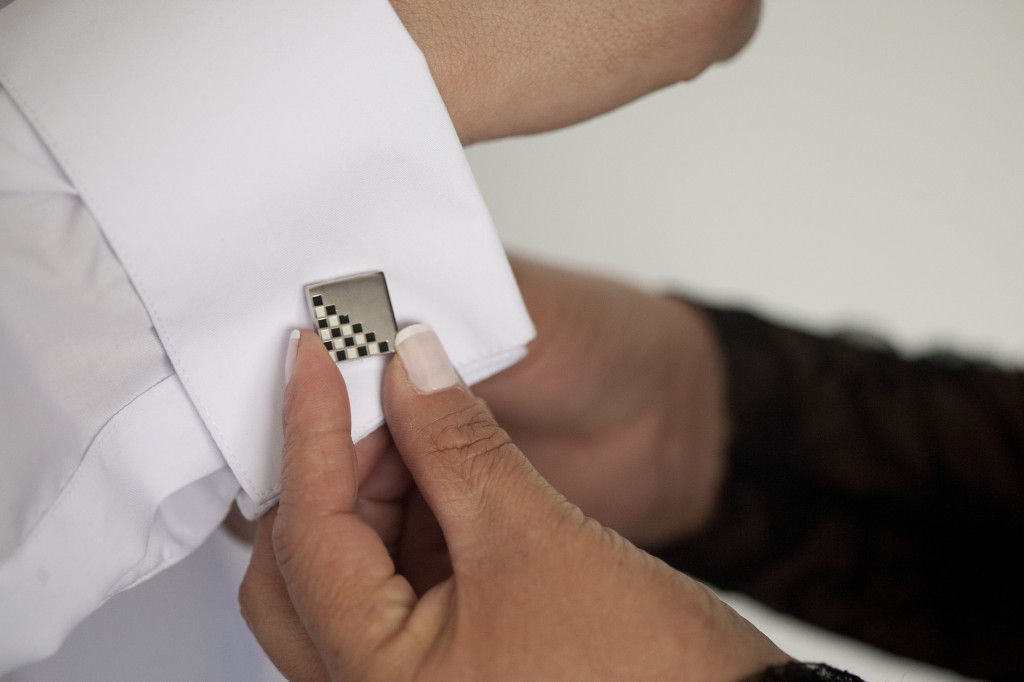
- Bring the two edges together face to face, "kissing" like two hands pressed together.
- Slide the cufflink through from the outside in, decorative face showing.
- Flip the toggle or adjust the fastening to lock the cufflink in place.
Start with the cuff that is more awkward for your dominant hand. If you get stuck, our illustrated step-by-step guide How to put on cufflinks breaks down every move.
Step 4: match them to your outfit
With your shirt and suit
Two approaches work: harmony, picking up a colour from your outfit (a navy cufflink with a navy suit), or measured contrast, with a touch of bright colour on a plain shirt. Just avoid very colourful cufflinks on a shirt that is already busy with patterns.
With your other accessories
The most useful habit: one metal colour for your watch, belt buckle, tie clip and cufflinks. For the tie or bow tie, choose a single focal point: if one is very expressive, keep the other understated. Our guides to matching cufflinks with your shirt and with your tie offer concrete combinations.
With your sleeve length
Your shirt sleeve should show about a centimetre beyond your jacket sleeve: that is what makes your cufflinks visible without flaunting them.
Step 5: know when to wear them
- At the office: absolutely, with discreet designs. See our guide Cufflinks at work.
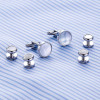
- At weddings and ceremonies: their natural territory, with elegant designs in mother-of-pearl, onyx or polished metal.
- At black-tie evenings: with a dinner jacket, understatement is the rule.
- At the weekend: a French cuff shirt worn without a jacket, with a more playful design, shows that cufflinks are not just for big occasions.
What next: building a small collection
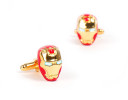
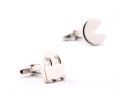
Once you have adopted your first pair, the second often follows quickly. A good foundation fits into three pairs: a classic silver-tone pair for everything, a dressy pair for ceremonies (mother-of-pearl or onyx), and a pair that is truly you, chosen from our quirky designs. For more help choosing, see our guide to buying your first cufflinks.
Looking after your first pair
A few habits are enough to keep your cufflinks as good as new: a wipe with a soft cloth after each wear, no abrasive products, perfume sprayed on before you put them in, and storage pair by pair, in their box or a small case. Details for each material are in our guide Caring for your cufflinks.
Frequently asked questions
Do you need a special shirt to wear cufflinks?
Yes: a shirt with French cuffs, single cuffs made for cufflinks, or convertible cuffs. The cuff must have two buttonholes.
Which fastening is easiest for beginners?
The toggle: slide the cufflink through the buttonholes, then flip the little bar. Silk knots are very simple too.
Can you wear cufflinks without a jacket?
Yes, especially in a relaxed setting. They are more visible then, so go for a discreet design or one you fully own, depending on your style.
How many pairs do you need to start?
One is enough, as long as it is versatile. Three pairs (classic, dressy, playful) then cover every occasion.