Gold cufflinks have an instantly ceremonial air. They bring to mind special occasions and evening wear, sometimes a piece handed down from father to son. But the words "gold cufflinks" cover very different things, from hallmarked solid gold to a simple gold-tone finish. Here is how to choose well, when to wear them and how to keep them gleaming.
Solid gold, vermeil, gold-plated, gold-tone: what's the difference?
Before comparing prices, you need to know what you are comparing. Four terms come up most often:
Solid gold
The cufflink is made entirely from a gold alloy. In France, the most common gold in jewellery is 18-carat gold, or 750 parts per thousand of pure gold, alloyed with other metals for strength and colour (yellow, rose or white gold). A gold piece sold in France carries a purity hallmark; for 18-carat gold, it is a small eagle's head. This is the most durable and most expensive option, often kept for exceptional gifts or family heirlooms.
Vermeil
This is solid silver coated with a layer of gold. Vermeil gives you the colour of gold on a precious base, at a more accessible price than solid gold. Over time and with friction, the gold layer can wear and reveal the silver beneath.
Gold-plated
A thin layer of gold is applied to a base metal, often brass. The result looks very close to gold for a much smaller budget. How long it lasts depends on the thickness of the layer and the care you give it.
Gold-tone finish
The metal (brass, steel, alloy) is given a gold-coloured finish, with no real gold or only a trace. It is the most affordable option, and the most widespread among fashion cufflinks. Well looked after, a good gold-tone finish holds up very respectably.
At Une Autre Paire de Manches, our selection of gold-coloured cufflinks is mostly made up of gold-tone designs, from the most classic to the most playful: the gleam of gold without a jeweller's budget. Each product page states the colour and finish of the model.
When should you wear gold cufflinks?
Gold catches the light: that is both its strength and its limit. It naturally suits the moments when you dress with care.
- Weddings: for the groom, the best men or the father of the bride, gold echoes the wedding rings. Our guide Gold or silver cufflinks for a wedding? will help you decide.
- Black-tie evenings: with a dinner jacket, gold pairs well with black onyx or mother-of-pearl, in understated shapes.
- Festive season parties and dinners: a gold-tone pair brings a warm touch to a dark suit.
- The office: perfectly possible, provided you choose a discreet, modestly sized design, matt or brushed rather than very shiny.
What should you wear with gold cufflinks?
Suit colours
Gold comes into its own on warm, deep tones: navy, brown, bottle green, burgundy, beige. On a black suit, it takes on a festive character. On a very cool grey, silver often looks more natural, though a pale gold can create an attractive contrast.
The shirt
A white or sky-blue shirt with French cuffs remains the safest base. Pale pink and cream show gold off particularly well. As a reminder, cufflinks can only be worn with cuffs designed for them: our guide French cuff shirts explains how to recognise them.
The other metals in your outfit
A simple, effective rule: stick to one metal colour. If your cufflinks are gold-tone, a watch with a gold case or a leather strap, a gold-tone belt buckle and, if you wear one, a matching tie clip make a coherent whole. A steel watch is not forbidden, but the effect is less harmonious.
Which design should you choose?
A few families of shapes keep coming back, each with its own temperament:
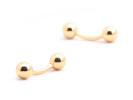
- The double ball, with no mechanism and identical on both sides of the cuff: the great shirtmaking classic, like our Gold cufflinks.
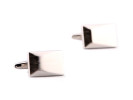
- The rectangle or square, more architectural, which gives the cuff structure; for example the finely ridged Gold Digger design.
- The round, plain or engraved: timeless, and ideal for engraving initials.
- Patterned designs, where gold highlights a motif: a knot, a twist, a symbol.
For the dressiest occasions, browse our selection of luxury cufflinks too.
How do you care for gold or gold-tone cufflinks?
Everyday cleaning
After each wear, a wipe with a soft, dry cloth removes fingerprints and perspiration. When the shine starts to fade, dip the cufflinks briefly in lukewarm water with a drop of mild soap, rub gently with a very soft brush, rinse, then dry carefully with a lint-free cloth.
What to avoid
- Abrasive powders and pastes (toothpaste, bicarbonate of soda), which scratch solid gold and quickly wear down plating or a gold-tone finish.
- Household cleaning products, chlorinated water and seawater.
- Contact with perfume: spray it on before you put your cufflinks in.
- Prolonged soaking for designs with enamel, mother-of-pearl, a stone or a glued part.
Storage
Gold, especially solid gold, is a soft metal: store each pair separately, in its box or in a compartmentalised case, so that other jewellery cannot scratch it. For a solid gold or vermeil piece that has truly lost its shine, a jeweller can give it a professional polish. All our methods, material by material, are in our guide Caring for your cufflinks.
Frequently asked questions
How can you tell whether cufflinks are solid gold?
Look for a purity hallmark on the post or the fastening. In France, 18-carat gold is marked with an eagle's head. If there is no hallmark, and for an antique piece, a jeweller can test it.
Do gold-tone cufflinks tarnish?
A gold-tone finish can wear with friction and harsh products, revealing the base metal underneath. Regular wiping and storage away from knocks will considerably extend its life.
Can you wear gold and silver together?
It is possible with two-tone designs, but for a formal outfit it is better to stick to one metal colour for your watch, cufflinks and belt buckle.
Gold or silver for a wedding?
Both work. Gold answers yellow-gold wedding rings and warm tones; silver goes better with grey suits and with white gold or platinum rings.