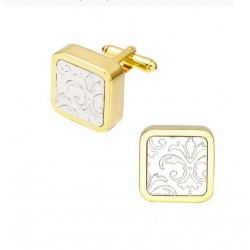
The cufflink is probably one of the only pieces of jewellery a man can wear to stand out in an outfit. Now a genuine fashion accessory, it adds an elegant or quirky touch, depending on the style and materials used. More than a simple accessory, it closes a shirt's cuffs while revealing a facet of its wearer's personality. If you're a cufflink devotee, you might wonder about its origins. Who could have come up with the idea for this item? Both a fashion accessory and a timeless one, the cufflink has stood the test of centuries. Let's start by looking at how the cufflink has evolved, then discover a few iconic figures together. Indeed, while it's hard to pin down a single inventor of this creation, several names have shaped its history.
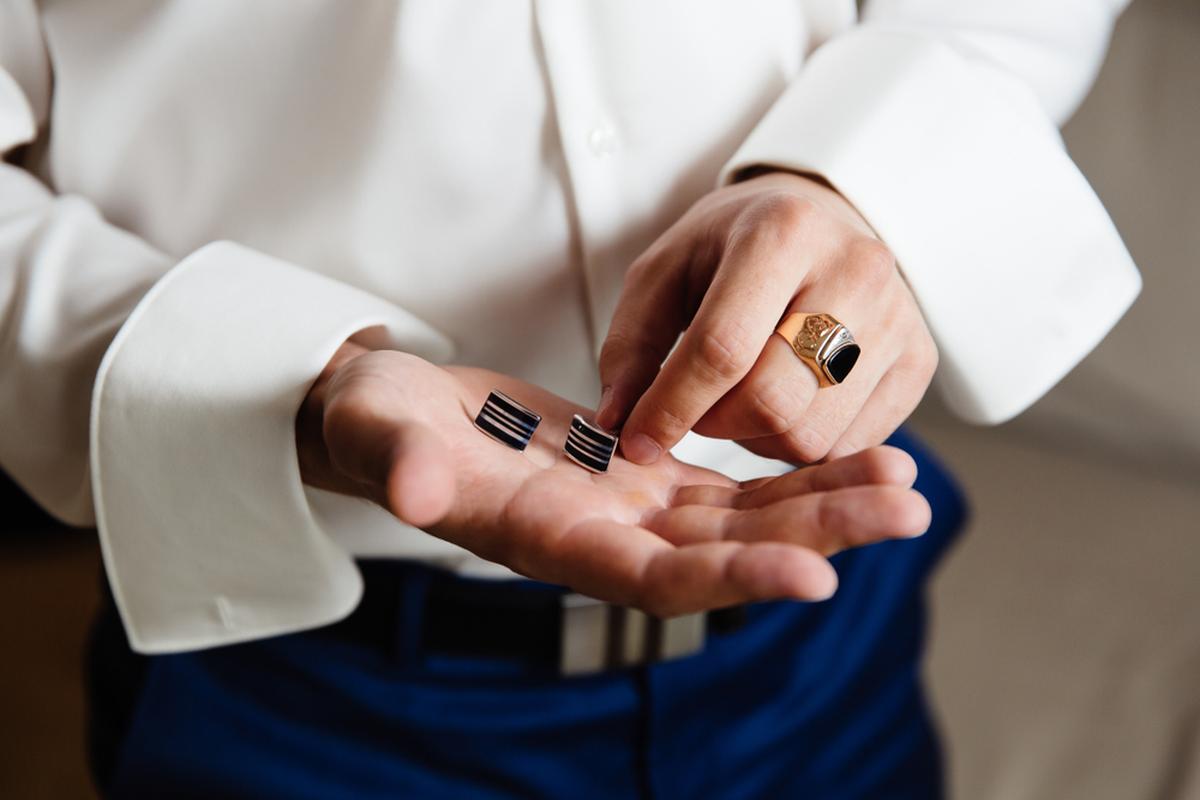
The evolution of the cufflink
The murky origins of the cufflink
Let's be upfront: the name of the genius who thought up the cufflink mechanism hasn't survived the centuries. It's therefore hard to pinpoint its exact origins. Some sources suggest it may have been used as early as the Middle Ages in France, exclusively by kings and princes. However, written records only confirm its existence with certainty from the 16th century onward.
An ancestor among the Egyptians
Objects similar to our cufflinks have been found in a pharaoh's sarcophagus. It's possible this invention dates back several millennia. However, it has never been confirmed that this mechanism was used for shirt cuffs. The mystery remains unsolved for this Egyptian discovery.
The emergence of cufflinks in Europe
Initially, shirt cuffs were closed with ribbons. Cufflinks then allowed people of high rank to stand out. They were made from noble materials, such as gold or silver, and accessible only to the elite. Some were even set with gemstones.
At the time, cufflinks were used as a genuine promotional medium. Some designs were created for princely weddings or coronations.
The cufflink in the 20th century
Made more widely available by the end of the 19th century, the cufflink was hugely popular at the start of the 20th. It was a mark of elegance and completed an outfit. This quote from French writer Jules Renard sums it up well: "The most serious thing about the human body is cufflinks."
It then fell out of fashion in the 1970s, notably with the arrival of shirts with built-in buttons. It even seemed hopelessly old-fashioned by the 1980s. It's only in recent years that it has reclaimed its former glory. Major fashion names have reinvented it as a genuine fashion accessory. Whether the same colour as the tie or bow tie, or in a completely quirky style, the cufflink has reclaimed its place among fashionable, elegant accessories.
Today, it helps close a shirt cuff with either elegance or quirkiness, depending on whether the pair of cufflinks is made of fabric or has an original shape. It's an accessory to wear especially to a wedding, to make a good impression. Now within everyone's budget, you'll find a huge range for sale. Whether a classic collection, in silk, or in different colours, there's no missing them. The face of the cufflink offers endless possibilities, from humorous motifs to the most understated designs. The finishing touch: wear your cufflinks with a French-cuff shirt.
Illustrious names in cufflinks
Although we don't know the inventor of this ingenious system, several names have left their mark on the history of the cufflink. Whether by developing original designs or using new materials, each has contributed to making this men's accessory more widely available.
Edward VII and Carl Fabergé
Edward VII was King of the United Kingdom during the second half of the 19th century and the very start of the 20th. He was said to be a great enthusiast of cufflinks. It was he who notably popularised the use of colours and gemstones (precious and semi-precious) on cufflinks. He was particularly fond of the work of Fabergé, a Russian jeweller.
George Krementz
This American jeweller invented, in the 1880s, a machine that would make him famous: a manufacturing machine for metal cufflinks. This allowed them to be produced in far greater numbers. Cufflinks were no longer the preserve of high society — they became widely accessible. Some companies even commissioned designs bearing their logo, to distribute to employees and clients.
Jewellers Cartier and Tiffany
In the 1990s, it was these houses that restored the cufflink's former glory. They created luxury designs that took a prominent place in their collections.
The house of Paul Smith
This was one of the first houses to create original designs, including the famous car cufflinks, at the end of the 20th century. Even today, Paul Smith stands out with its distinctive cufflinks. The motifs can be read as a wink, or a clue to their wearer's personality. Snakes, champagne bottles, crayons, or even a rugby ball: there's something for every taste.

Our tips for choosing and wearing a pair of cufflinks
Cufflinks remain an essential accessory today. Wearing them, however, is no longer reserved for evenings out and other important events. They're a genuine accessory that helps project an image: distinguished, original, creative, elegant, and so on.
- Cufflinks can be matched with other accessories in your outfit. It's generally not advisable to wear too many colours at once, at the risk of losing the elegance of your outfit. So choose cufflinks matched to your belt, your socks, your tie or bow tie.
- They elevate a very (or overly) plain outfit. If you're wearing a black suit, a lovely pair of cufflinks on your wrists will boost its elegance while helping you stand out from others.
- Humorous cufflinks can bring out this side of your personality. Preferably wear them with a sober outfit — it's also a great way to soften an overly formal suit.
- In certain sectors, cufflinks are particularly well regarded — banking, for example.
- If you're unsure which pair of cufflinks to wear, favour an understated pair. Whether steel, gold, or wood, opt for a classic, elegant touch that's guaranteed not to be a misstep.
- If you want to wear cufflinks at work, adapt accordingly. A creative role leaves plenty of room for a touch of originality.
- If you're looking to start wearing this largely male accessory, you might not feel entirely comfortable yet. The ideal starting point is a pair of silk-knot cufflinks. Easy to put on, easy to match, and inexpensive, they bring an elegant touch along with a slightly more relaxed, "sporty" feel. Many designs and colours are on sale.
- You might end up wearing them regularly. In that case, don't hesitate to try different types of closures to find the one best suited to your activities. Indeed, some men find their cufflinks get in the way when typing at a computer, for example. So try the traditional T-back, but also chain-link or round designs.
Discover our best sellers
{productsoncms_2}
We also recommend these other pages:
Nos boutons de manchette en rapport
Sélection en lien avec ce guide