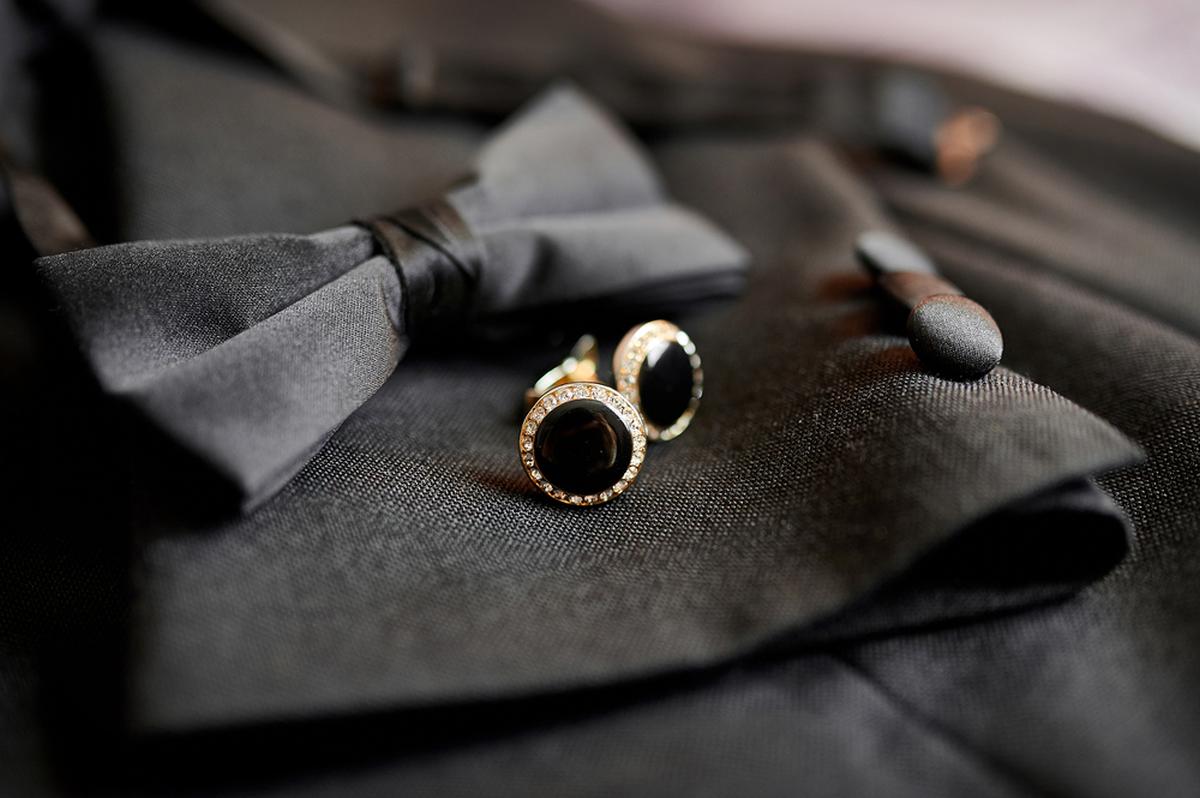
If you like to take care of your appearance and your outfit, you've surely noticed the strong comeback of cufflinks in menswear. Whether in gold, silver, steel or silk knots, the cufflink has dressed countless shirt cuffs in recent years. Hugely popular with dynamic men, or worn for a wedding or a party, this small fashion accessory has once again earned its place among the big players, alongside fine jewellery.
Discover the cufflinks guide if you want to know everything on the subject. On this page, we'll take a look at the history of cufflinks. You'll see they're nothing new, and were, for many years, the favourite fashion accessory of men of taste. Although once reserved for kings and princes, they eventually became widely popular and are now worn on the shirt cuffs of quality-conscious men everywhere.
The different parts of a cufflink
What are cufflinks made of? They're mainly made up of three parts:
- The visible face, which is decorated (engraved metal, semi-precious or precious stones, silk, wood, leather, etc.).
- The metal post, which links the visible face to the fastening back.
- The fastening back, which swivels 90° and keeps the cufflink securely on the shirt cuff.
Some designs, such as silk-knot cufflinks, form a single piece. Others have a closure system built into the back, such as ball-back cufflinks. But let's take a closer look at the different cufflink shapes:
- Bullet-back cufflink: the most classic, with a hinged post that folds down.
- Fish-tail cufflink: a metal part sits perpendicular to the post to close the cufflink.
- Chain-link cufflink: the two parts are linked by a small metal chain.
- Stud cufflink: made up of one large decorated back and a smaller one, inserted into the cuff without needing to be closed.
- Silk-knot cufflink: made of silk, fabric or elastane, it slides directly through the French cuff.
- Ball-back cufflink: similar to the stud cufflink, but rounded in shape.
- Double-action cufflink: a closure system similar to a watch clasp.
The birth of the cufflink
During excavations in Egypt, archaeologists discovered, in tombs, small items strongly resembling our cufflinks. However, no evidence has confirmed that the Egyptians wore these items as cufflinks. Many years later, men wore shirts with sleeves rolled up using ribbons threaded through holes in the shirt cuffs. It was in the 16th century that the first cufflinks appeared, with two buttons linked by a chain. The 17th century firmly marked this accessory's arrival in the daily life of kings and princes. Today, we still don't know for certain who invented cufflinks.
Cufflinks became the fashionable accessory at the court of King Louis XIV. His "cravatier" was tasked with ensuring the king was perfectly turned out — cufflinks were part of that. Made of gold or silver, these cufflinks were adorned with:
- Precious stones.
- Semi-precious stones.
- Mother-of-pearl inlays.
- Enamel, crystal and glass paste.
Some, in gold or silver, were engraved with the wearer's initials or coat of arms. Others were engraved with the name of a county or principality, and were worn as a sign of allegiance.
The Industrial Revolution helped make the cufflink more widely available. George Krementz invented a machine for manufacturing cufflinks at scale. Even so, the accessory remained the preserve of wealthy bourgeois and nobles. The emergence of the so-called French shirt cuff greatly contributed to the cufflink's rise. The early 20th century saw the cufflink enter haute couture collections. Largely abandoned until the 1990s, when it served mainly as a promotional item, notably in the United States, it has been back in the spotlight in recent years. Since then, its success has only grown.

Which type of cufflink to choose based on your style
As a man of taste, there's no doubt you'll choose your future cufflinks with care. To help you navigate the different types of cufflinks, let's explore the many designs sold in jewellery shops or retail stores:
- Gold, silver or platinum: naturally the most expensive. They can be set with precious stones.
- Steel: hard-wearing, and a great alternative to gold or silver. They have a modern, quirky or classic look.
- Silk knots: made from elastane for stretch, and fabric, these cufflinks slide directly into the French cuff. Their price is very reasonable.
- Enamel, crystal or glass: an enamel, crystal or glass decoration is set into the metal, gold or silver cufflink. Be aware, these cufflinks are fairly delicate.
- Silk: the silk is mounted on a metal support. These are the most delicate of cufflinks.
- Wood or leather: a major new trend in recent years, wooden or leather cufflinks should absolutely never get wet.
Depending on your budget, since the price ranges from a few dozen to several thousand euros, you can choose the cufflink that suits you. A gold, silver, platinum or steel design will pair with any colour of suit, jacket, shirt, bow tie or tie. If you go instead for a silk-knot or silk design, you'll need to check your outfit's colours closely, to match your cufflinks properly. Leather or wooden cufflinks are perfect with an outfit that's both modern and chic.
Matching your outfit to your cufflinks
Just as a tie and bow tie should harmonise with the shirt, cufflinks should also match your outfit as a whole. If you're wearing a tie or a bow tie, take care to choose a shirt collar suited to one or the other: French collar, English collar, American collar, and so on, not forgetting French cuffs for your cufflinks.
Gold, silver or steel cufflinks are truly versatile. But if you choose a pair of coloured cufflinks, plan to match them with:
Cufflinks in 2019 are truly having a moment. If it's your first purchase, particularly for a wedding, we can only recommend investing in a reasonably priced pair of cufflinks, paired with a good-quality French-cuff shirt. If you'd like to start a small cufflink collection, don't hesitate to buy a storage set with several designs in different colours, so that, when the time comes, you can easily choose which cufflinks are yours for the day.
We also recommend these other pages:
- Who wears cufflinks?
- Why wear cufflinks?
- Cufflink shapes
- Cufflink materials
- The most beautiful cufflinks
Our best sellers:
Related Products