

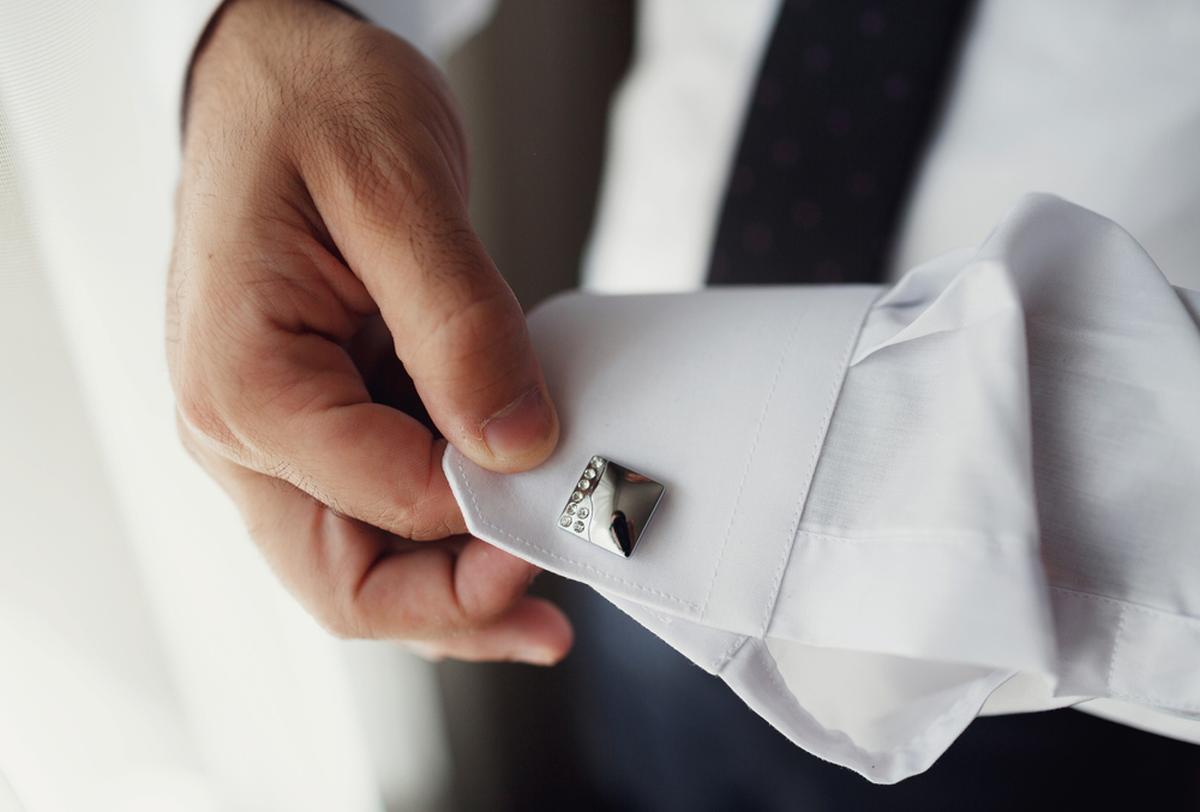
Cufflinks are a men's fashion accessory that, while more discreet than a tie, a bow tie, a belt or a watch, can bring an elegant, modern touch to your style, much like jewellery adorning your shirt cuffs. As a reminder, cufflinks are decorative fasteners used to close shirt cuffs that have no buttons of their own — a feature specific to what are known as French-cuff shirts.
Here, we take a look at the different types of cufflink materials and their impact on far more than just style and look — including manufacturing quality, care, price, and even the clothes they can be worn and paired with, and on which occasions. As we'll see, cufflinks have a great deal in common with the world of fine jewellery and fashion.

Metal cufflinks
Cufflinks were introduced in the 17th century to replace the ribbons and lace once used to close the shirt cuffs of upper-class men, in France as in many other European countries. Given the metalworking know-how of the time, and the nobility of the men likely to buy and wear them, cufflinks were mainly made from precious metals such as gold and silver, or from rare pearls linked by a brass chain.
Today, while silver and other precious-metal cufflinks are still around, the materials most commonly used by cufflink makers make them accessible to far more people — or at least offer products across every price range.
Stainless steel cufflinks
Stainless steel has plenty of advantages, in terms of design, wear, and how it works with an outfit. Its grey colour, close to silver but less shiny, makes it easy to match with a shirt, whether colourful or more sober, without fear of a fashion faux pas or wearing them with an inappropriate outfit.
What's more, stainless steel is virtually indestructible, so wearing it daily won't cause premature wear or require complicated care. Beyond that practical side, steel cufflinks let you play with styles and trends while keeping a relaxed, modern look.
Metal alloys
When a cufflink maker offers a collection in metal alloys, it allows them to create pieces that look close to silver, steel or gold, depending on the metals used, without pushing the price of the cufflinks into the premium bracket.
The very reasonable price of alloy cufflinks makes it easy to buy a pair for a one-off occasion other than a wedding, to try the style out, or to give a man the equivalent of a piece of costume jewellery. What's more, the great flexibility of the manufacturing processes used for alloy cufflinks results in an incredible variety of choice, colours and shapes, letting you dress your shirt in a classic, modern or bold style.
Silver and other precious-metal cufflinks
Of all precious-metal cufflinks, silver ones are undeniably the easiest to match and wear, thanks to silver's relatively neutral colour. Cufflinks are also made using other metals, including:
- Platinum: hypoallergenic and resistant to tarnishing over time, platinum is an interesting metal for a man who wants silver-coloured cufflinks without the drawbacks of silver.
- Titanium: robust and hard-wearing, titanium offers a modern alternative, giving you grey-toned cufflinks that suit a wide range of styles.
- Gold: a classic among classics, gold — even when not solid, and used purely as ornamentation — remains tricky to pair with everyday wear. It's best to test it against your intended shirt colour first, or reserve it for important events such as a wedding.
- Copper and bronze: the distinctive colour of these metals can make it harder to find a matching outfit, especially as they tend to develop a patina and change colour over time.
Original and authentic: silk-knot cufflinks
To break with the tradition of metal cufflinks, nothing beats turning to ones made entirely of silk. With no real clasp, this type of cufflink comes in every colour imaginable, since fabric dyeing covers the whole colour spectrum. It's therefore very easy for a man to find silk-knot cufflinks to match a colourful bow tie, an original tie, or even a leather belt.
The downside of this abundance of colour is that these cufflinks are less easy to wear in a strictly formal or professional setting, for example with a classic black suit and tie. They're best worn to keep a touch of refinement with a more relaxed French-cuff shirt outfit.
In practice, a silk-knot cufflink takes the form of two small, identical silk balls, linked by a cord of silk, leather or cotton. To use them, simply pass one ball through the first cuff buttonhole, then do the same with the other silk ball, which takes the place of a traditional clasp.
Silk-knot cufflinks are very affordably priced, but are naturally more fragile than metal ones.
Decorative materials used to embellish metal cufflinks
Just as in the world of fine jewellery, it's common practice to mix materials to make cufflinks even more beautiful, original or luxurious. Decorative materials are most often used on the visible face of the cufflink to add small details that make all the difference, while keeping a metal frame or clasp underneath for strength.
Here's an overview of the different materials used, along with their main characteristics:
- Wood: timeless and naturally warm, wood is also perfect for bringing a modern touch and a unique style.
- Leather: leather is generally used to link the metal parts of a cufflink together. Its distinctly masculine, quirky aesthetic can create an interesting contrast in a casual setting.
- Enamel: enamelling requires a high level of technical skill from the workshop producing enamelled cufflinks, so their price is generally higher.
- Mother-of-pearl: natural and precious, mother-of-pearl remains a classic material, lending itself to a timeless, chic look.
- Precious and semi-precious stones: rubies, emeralds, sapphires, diamonds, and the whole range of semi-precious stones. You can find cufflinks set with all these dream stones, just as with fine jewellery. The rest comes down to budget and taste, since the most luxurious cufflinks aren't always the easiest to wear day to day.
We also recommend these other pages:
Our best sellers: {productsoncms_2}