

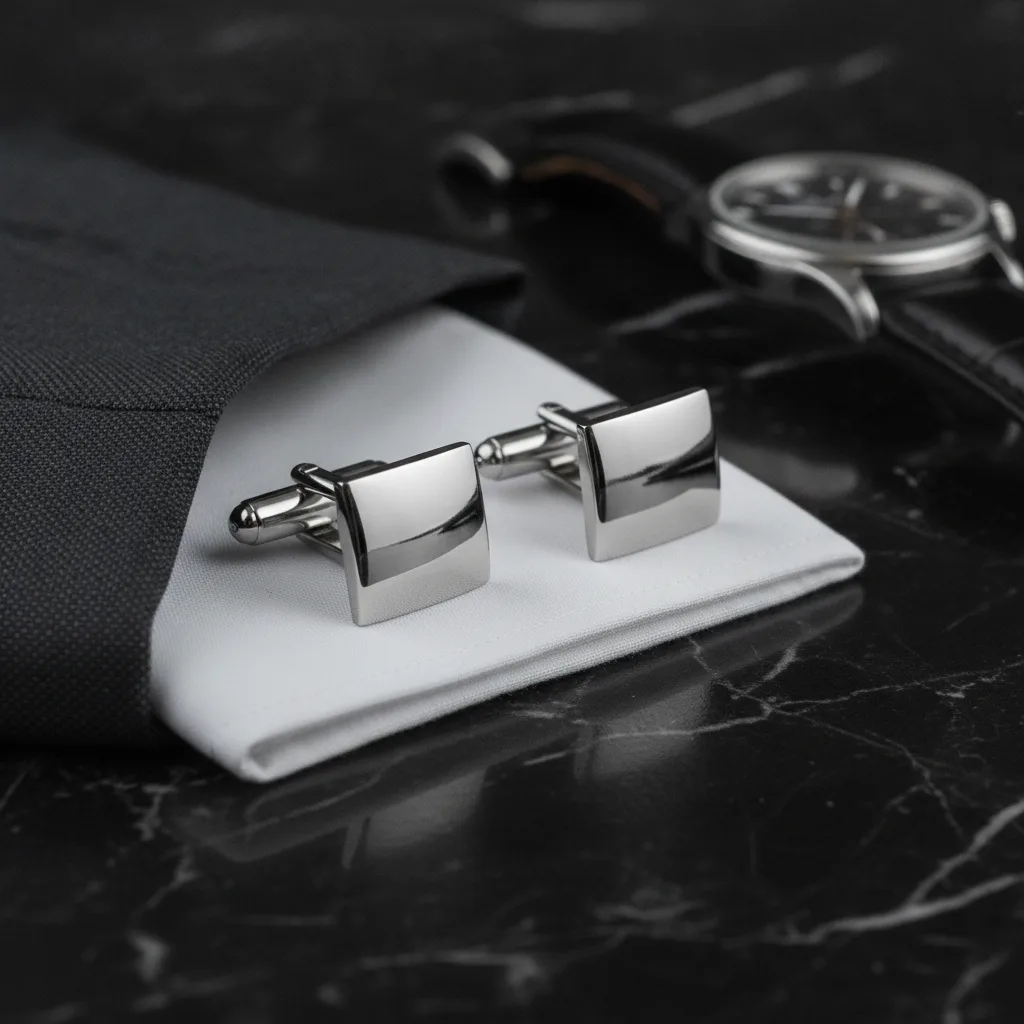
Rhodium-plated brass is a term you come across more and more often in descriptions of high-end cufflinks, and of rhodium-plated cufflinks in particular, without its meaning always being clearly explained. Yet understanding this surface treatment radically changes the way you choose, care for and keep your accessories.
At Une Autre Paire de Manches, our selection includes rhodium-plated cufflinks, and each product page details the materials of the design. Here is everything you need to know about rhodium plating as applied to cufflinks, from the technical definition to practical everyday advice.
Rhodium-Plated Brass and Rhodium-Plated Cufflinks: The Guide
Reading time: ~9 min
- What is rhodium plating and how is it applied to cufflinks?
- The practical benefits of rhodium-plated cufflinks
- Comparison table: rhodium-plated vs bare silver vs standard brass cufflinks
- How to care for your rhodium-plated cufflinks day to day
- How long does rhodium plating last, and can it be redone?
- How to recognise and choose genuine rhodium-plated cufflinks
- Storing rhodium-plated cufflinks to avoid scratches and tarnish
- Going further with rhodium-plated cufflinks
- FAQ
What is rhodium plating and how is it applied to cufflinks?
What is rhodium?
Rhodium is a precious metal belonging to the platinum group, like iridium and osmium. Its chemical symbol is Rh and its atomic number is 45. It stands out for its exceptional whiteness, its high hardness and its remarkable resistance to oxidation and chemical agents. These properties make it a material of choice, used in a very thin layer to protect other metals, rather than in solid form.
How does rhodium plating work?
Rhodium plating is an electroplating surface treatment that deposits a thin layer of rhodium by electrolysis on the surface of a piece of jewellery or a metal accessory. This layer is generally between 0.1 and 1 micron thick. Despite its thinness, it is enough to profoundly change the surface properties of the base metal, whether that is 925 silver, white gold or brass.
On rhodium-plated cufflinks, this treatment comes at the very end of manufacture. The jeweller immerses the piece in a bath containing rhodium in solution, then passes an electric current through it, which causes the element to be deposited on the surface. The result is an even finish of a very pure white, close to the look of platinum.
The practical benefits of rhodium-plated cufflinks
A brighter look
The first visible benefit is aesthetic. Sterling 925 silver, the benchmark noble metal in French jewellery, naturally has a slightly grey tint and tends to blacken on contact with air and moisture, a phenomenon known as tarnishing. White gold, for its part, has a slight yellowish tone owing to its alloys. Rhodium plating corrects both effects by bringing an even, lasting whiteness that is immediately noticeable.
Better resistance to everyday wear
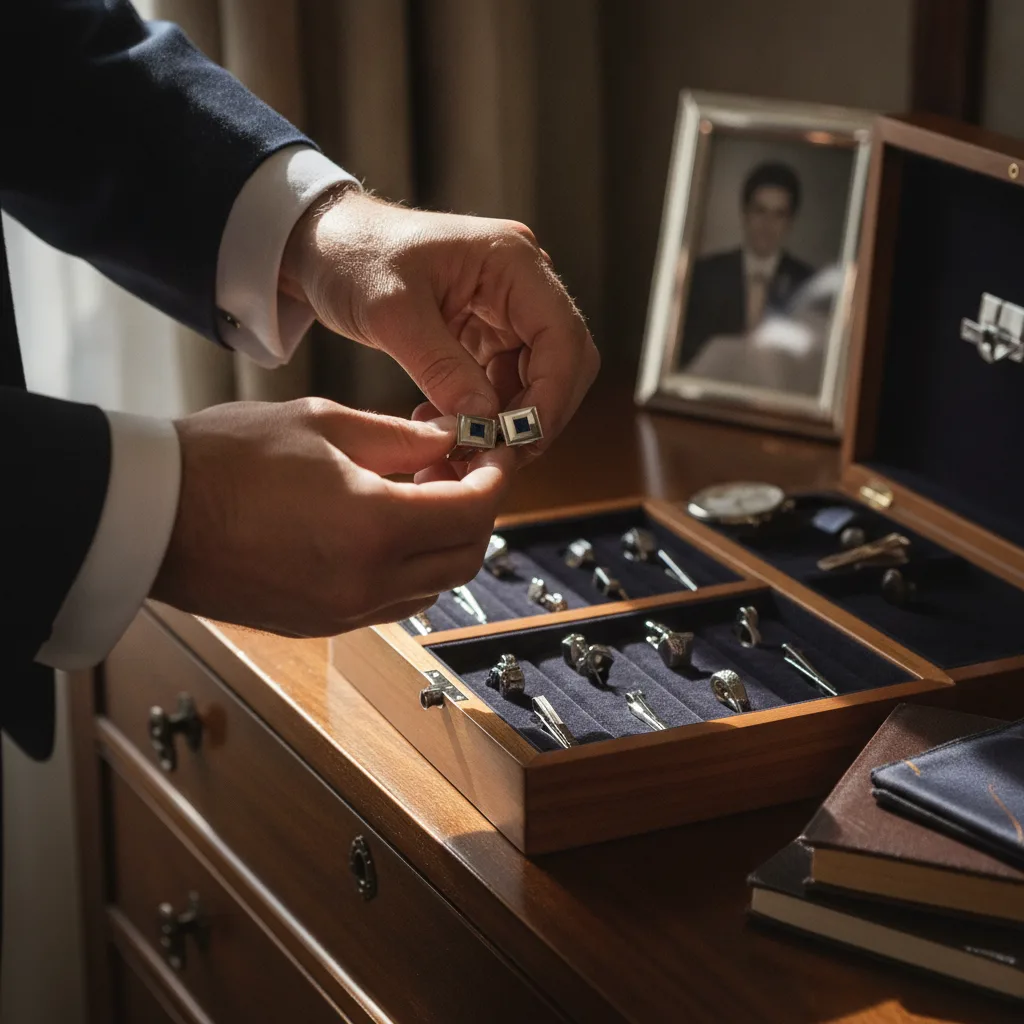
The second benefit is resistance to everyday wear and tear. The rhodium layer forms a physical barrier between the base metal and the outside environment. It limits oxidation, slows tarnishing and improves scratch resistance. For cufflinks worn regularly on a French-cuff shirt, whatever their shape, this protection makes a real difference to the accessory's lifespan.
Much simpler care
The third benefit concerns care. A bare, unplated silver cufflink needs regular cleaning with specific products to combat blackening. A rhodium-plated cufflink, by contrast, is simply cleaned with warm water and mild soap, with no special product. This makes the care routine considerably simpler, especially for a man who wears his cufflinks at work or at ceremonies.
Good to know: rhodium is one of the rarest metals in the world and its price regularly exceeds that of gold. That is why it is only used in an ultra-thin layer by electroplating, never in solid form. This rarity partly explains the quality positioning of rhodium-plated jewellery.
Comparison table: rhodium-plated vs bare silver vs standard brass cufflinks
| Criterion | Rhodium-plated cufflinks | Bare 925 silver | Standard brass |
|---|---|---|---|
| Resistance to oxidation | Very high | Low (blackens quickly) | Medium (may turn green) |
| Shine over time | High and stable | Variable, needs polishing | Low without regular care |
| Scratch resistance | Good (hard layer) | Low (soft metal) | Medium |
| Ease of care | Simple (water + mild soap) | Complex (specific products) | Moderate |
| Appearance | Bright white, close to platinum | Silvery grey, can tarnish | Golden/yellow, can tarnish |
| Durability of the treatment | Several years depending on use | Stable base metal | Stable base metal |
How to care for your rhodium-plated cufflinks day to day
Caring for rhodium-plated cufflinks is one of their main advantages over bare silver: it is simple, easy and requires no specialist chemical product, just warm water and a mild soap. Here is the recommended method for keeping them in perfect condition.
The right cleaning method
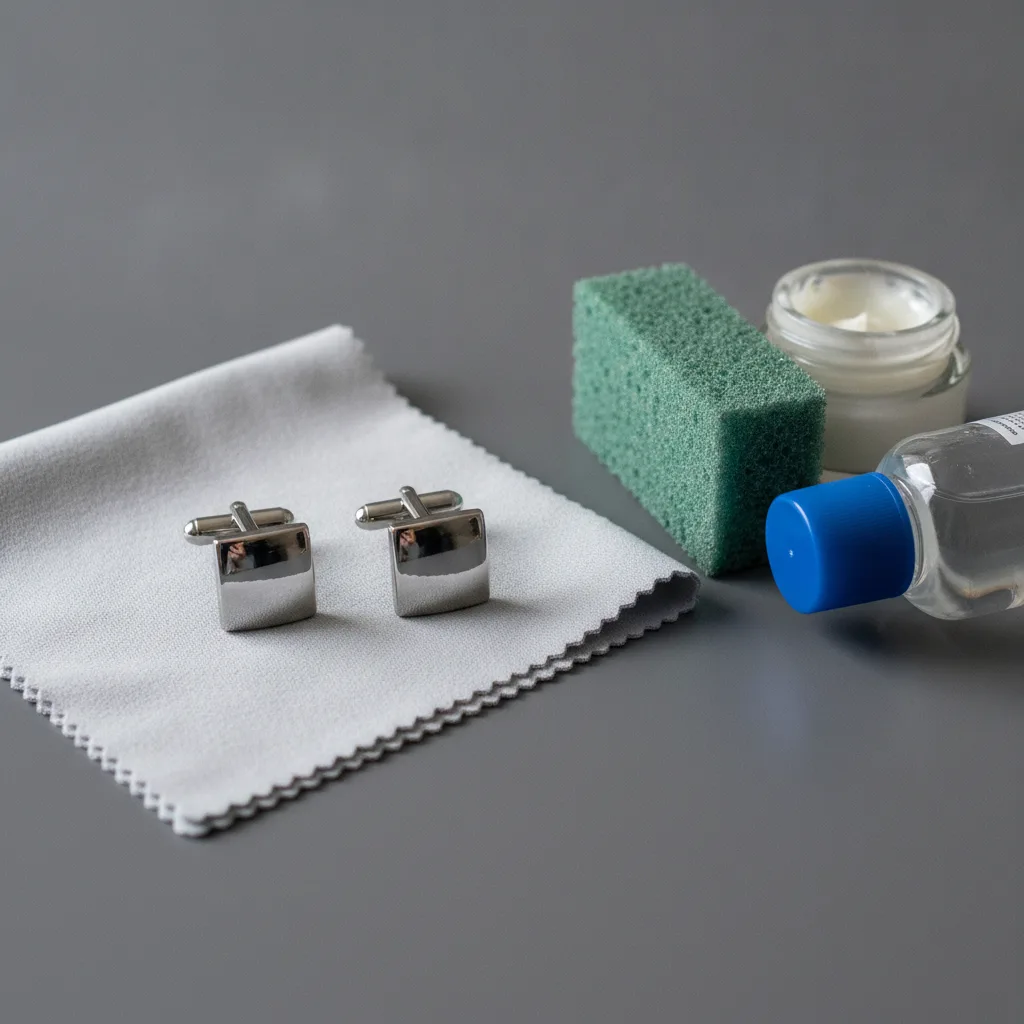
Start by preparing a bowl of lukewarm water with a few drops of mild soap, such as Marseille soap or a washing-up liquid without a strong fragrance. Soak your cufflinks for one to two minutes, then rub very gently with your fingertips or a very soft-bristled toothbrush. Rinse in clean water, then dry immediately and thoroughly with a lint-free cloth, preferably cotton or microfibre. Never leave your cufflinks to air-dry with water marks on them, as this can leave deposits on the rhodium-plated surface.
Care mistakes to avoid
Some products must never be used on rhodium-plated cufflinks. Here are the most common mistakes to avoid:
- Never use abrasive products: bicarbonate of soda, silver polishing paste, scouring sponges or rough cloths. These can wear away the thin rhodium layer and expose the base metal.
- Avoid any prolonged contact with harsh chemicals: bleach, solvents, perfume, hand cream, heavy perspiration. These substances attack the plating and speed up its wear.
Set designs: a special case
For rhodium-plated cufflinks set with stones or mother-of-pearl, or featuring wooden elements, even more caution is needed: limit contact with water and avoid any prolonged soaking, which could damage the other materials.
How long does rhodium plating last, and can it be redone?
The lifespan of rhodium plating depends on several factors: how often the piece is worn, the type of base metal, the thickness of the deposited layer and the conditions of use. On cufflinks worn regularly, rhodium plating can last several years. On pieces worn only for special occasions such as a wedding or a ceremony, the layer can stay intact for much longer with no visible deterioration.
When rhodium plating wears, you usually notice a slight yellowing or a localised loss of shine, especially on areas subject to friction. This is not a deterioration of the base metal, simply wear of the surface treatment. A jeweller can then re-plate the piece, first repolishing it to prepare the surface and then applying a new layer by electroplating. This service is common in the jewellery trade and gives your cufflinks a like-new appearance again.
Key point: to extend the life of the rhodium plating, always take your cufflinks off before washing your hands, playing sport or using household cleaning products. These simple precautions considerably limit premature wear of the treatment.
How to recognise and choose genuine rhodium-plated cufflinks
Given the variety on offer, it helps to know how to read the wording on product pages or labels. Several phrases indicate a rhodium treatment: "rhodium-plated silver", "rhodium-plated white gold", "rhodium plate" or "rhodium-plated brass". All of them refer to a base metal coated with a layer of rhodium by electroplating.
The base metal plays an important part in the overall quality of the piece. 925 silver, the legal silver standard in French jewellery, is made up of 92.5% pure silver and provides an excellent base for rhodium plating. White gold, often alloyed with palladium or nickel, is also commonly rhodium-plated to correct its naturally warm tint. Rhodium-plated brass is a more affordable alternative with a very similar look, provided the rhodium layer is of sufficient quality.
Do not hesitate to ask the brand about the thickness of the rhodium layer, the base metal used and its care recommendations. A reputable brand will be able to answer these questions precisely. At Une Autre Paire de Manches, you can find our selection of cufflinks among the best sellers or explore our new arrivals to find the right design for your occasions.
Storing rhodium-plated cufflinks to avoid scratches and tarnish
Storage is often overlooked, even though it directly determines how long your accessories last. Thrown loose into a drawer, your rhodium-plated cufflinks risk scratching each other or being scratched by other jewellery and metal objects. Suitable storage prolongs the shine of the rhodium-plated surface without any extra effort.
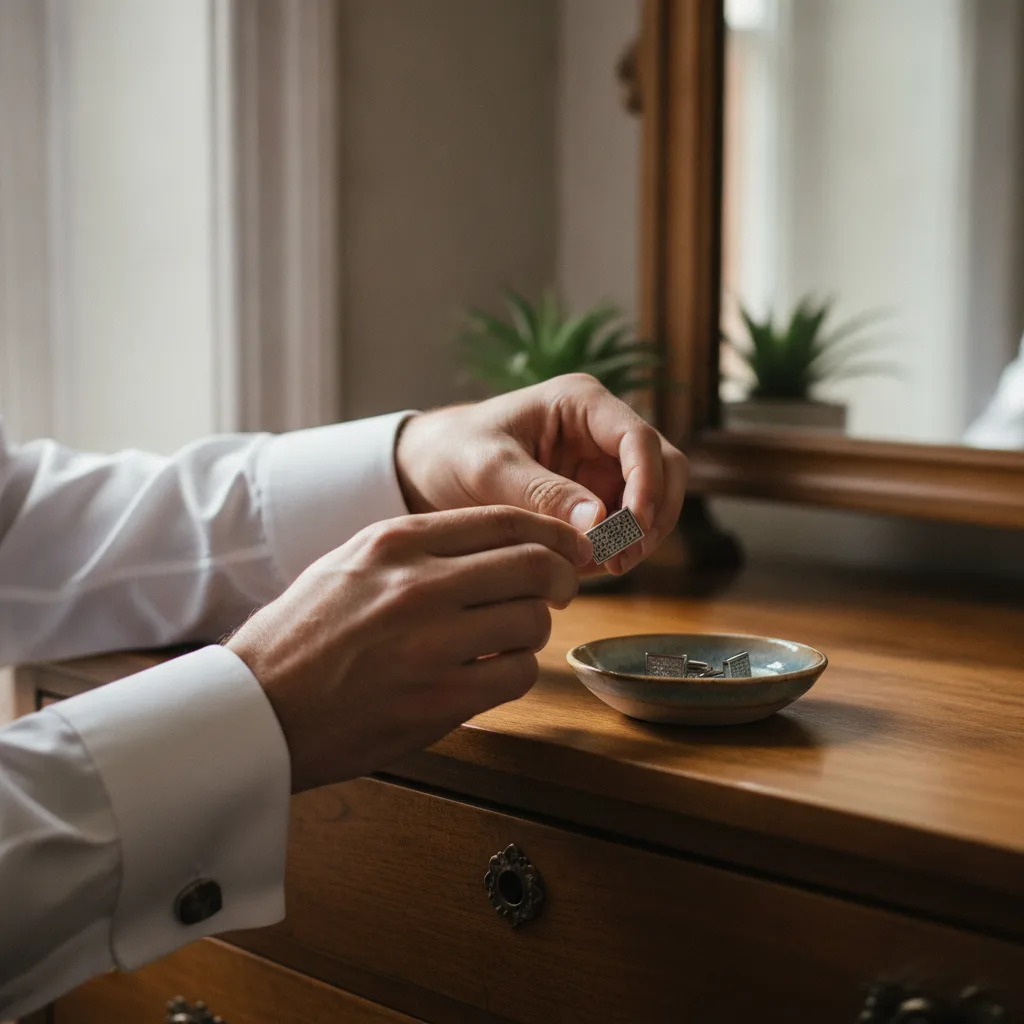
Opt for a jewellery box with individual compartments, ideally lined with velvet or a soft fabric. Keep your cufflinks away from direct sunlight, moisture and changes in temperature. If you do not have a dedicated box, wrap each pair in a small lint-free fabric pouch before putting them away. You can also explore the gift sets at Une Autre Paire de Manches, which help protect and present your cufflinks.
Going further with rhodium-plated cufflinks
Rhodium plating is not just a marketing claim: it is a technical surface treatment, proven in the jewellery trade, that brings real benefits in terms of shine, resistance to oxidation and ease of care. Choosing rhodium-plated cufflinks means opting for an accessory that keeps its sparkle over time, whether worn for a wedding ceremony, an important business meeting or a formal occasion.
With the right care habits and suitable storage, your rhodium-plated cufflinks will stay immaculate for many years. You can also discover our silk knots to vary your style according to your outfits.
FAQ
Can you wear rhodium-plated cufflinks every day without damaging them?
Yes, provided you take a few simple precautions. Take them off before washing your hands, using household products or doing sport. These habits significantly reduce wear on the rhodium layer and extend the life of the treatment.
Is rhodium plating safe for sensitive skin or people allergic to metals?
Rhodium is generally considered hypoallergenic. It forms a barrier between the skin and the base metal, which can reduce allergic reactions linked to certain alloys such as nickel. However, if you have a known allergy, ask the manufacturer for the full composition of the base metal.
What is the difference between a "gold-plated" cufflink and a "rhodium-plated" cufflink?
Gold plating means a deposit of gold on a base metal, while rhodium plating means a deposit of rhodium. Rhodium offers a whiteness and shine close to platinum, whereas gold plating gives a golden hue. Both processes use the same electroplating technique, but the metals deposited and the visual effects are different.
Are rhodium-plated cufflinks suitable for a wedding?
Absolutely. Their bright white sheen, close to platinum, goes perfectly with a white French-cuff shirt, a dark suit or a dinner suit. They are an elegant and practical choice for ceremonial occasions, because their shine needs no special preparation on the day.
Can antique or inherited cufflinks be rhodium-plated?
Yes, a jeweller can apply new rhodium plating to old pieces, provided the base metal is compatible (silver, white gold, brass). The piece is first cleaned and polished to prepare the surface, then immersed in the rhodium bath. It is an excellent way to breathe new life into family accessories while protecting them for years to come.