

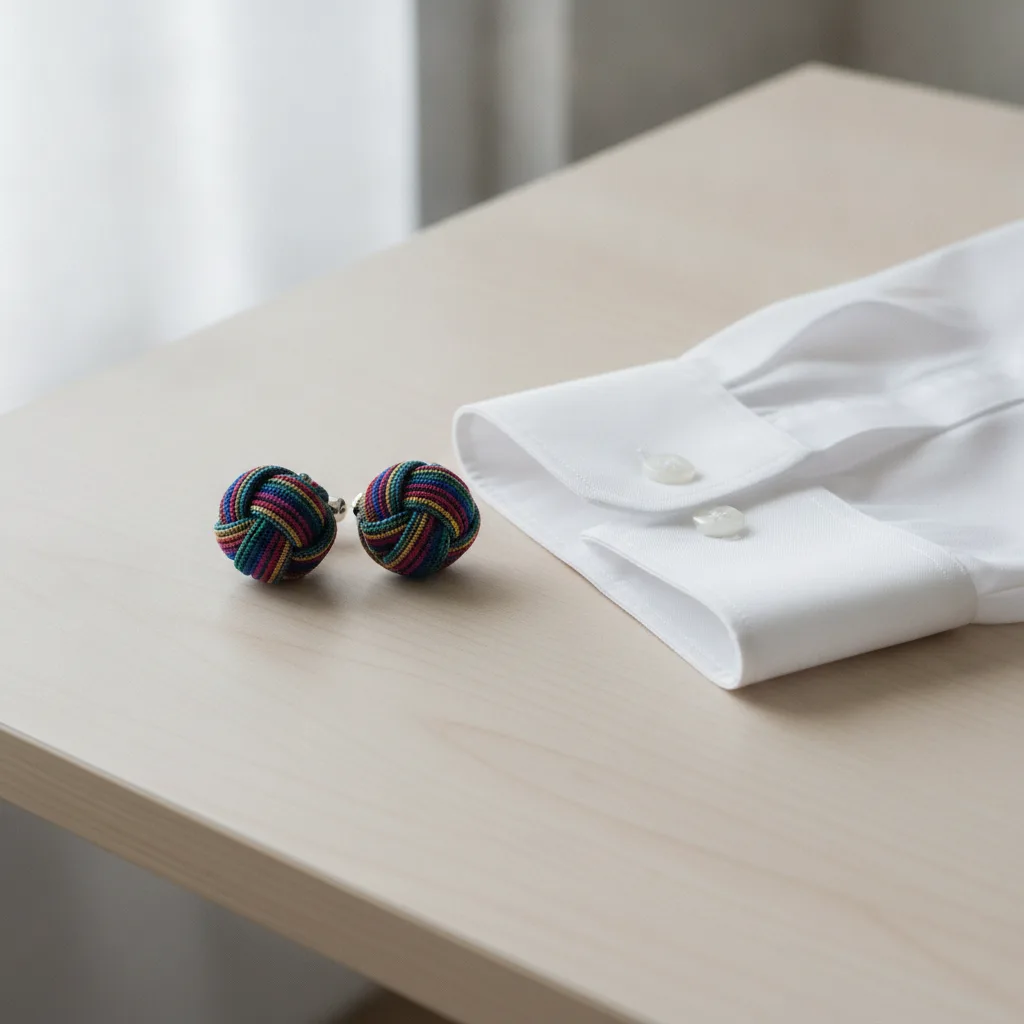
Fabric cufflinks occupy a special place in the world of men's accessories. Discreet yet distinctive, they bring a touch of personality to a French-cuff shirt, without the stiffness or weight of classic metal models.
Whether for a wedding, a ceremony, or simply to elevate an everyday dressy outfit, they win people over with their comfort, their lightness and the richness of their colours. Here's everything you need to know to choose, wear and care for them well.
Fabric Cufflinks | Complete 2026 Guide
Reading time: ~9 min
- Fabric cufflinks at a glance
- What fabric cufflinks are
- Why choose fabric cufflinks
- Materials and finishes: cotton, linen, silk or Liberty
- How to put fabric cufflinks on a shirt
- What size to choose and how to coordinate colours
- Personalised fabric cufflinks
- What budget to plan for fabric cufflinks
- How to care for fabric cufflinks
- Going further with fabric cufflinks
Fabric cufflinks at a glance
The key points about fabric cufflinks
- Definition and benefits: they combine a metal base with a fabric-covered face for superior wrist comfort.
- Available materials: cotton, linen, silk and Liberty of London fabric each offer a different look and durability.
- How to wear them: they're fitted onto a French-cuff shirt by aligning the four layers of fabric before inserting the cufflink.
- Size and colour: the standard diameter is around 15 to 20 mm, to coordinate with the shirt and the outfit.
- Personalisation: it's possible to have cufflinks made with your own fabric, including for a wedding.
- Care: gentle cleaning and storage in a box preserve the material and extend the accessory's lifespan.
- Budget: prices vary depending on the material and level of personalisation, with accessible entry-level options.
What fabric cufflinks are
Composition and manufacturing principle
Fabric cufflinks are made of a metal base, usually brass with a silver-toned finish, over which a fabric is stretched and fixed. The visible face is thus entirely covered, giving the accessory a soft, matte, warm appearance, very different from the cold shine of a steel or mother-of-pearl cufflink. The base stays sturdy and the fastening mechanism is identical to classic models: a pivoting bar or a swivel system.

This type of cufflink belongs to the broad family of silk-knot trim, that textile craft which works ornaments and accessories from threads and fabrics. It follows a tradition of artisanal making where each piece is assembled by hand, the fabric stretched over the base, then carefully fixed to guarantee it holds up over time.
Why choose fabric cufflinks
Comfort and style of fabric cufflinks
The first advantage is wrist comfort. Unlike fully metal models, the fabric-covered face doesn't heat up, doesn't feel cold, and doesn't scratch the skin. For a long day of meetings, a wedding or an evening event, this lightness makes a real difference.
The second advantage is the discreet originality they bring. A Liberty print, a striped cotton or a plain linen let you personalise an outfit without ostentation. They speak to those in the know without imposing themselves on others, which fits perfectly with the aesthetic of the modern gentleman who takes care over details without flaunting them.
Finally, the variety of available fabrics opens up a much wider range of possibilities than classic fine materials. You can match your cufflinks to your tie, your pocket square, or even the bride's dress, which makes them an accessory of choice for ceremonies.
Materials and finishes: cotton, linen, silk or Liberty
Comparing the main materials
The choice of material directly affects the visual result and how the accessory behaves over time. Here's an overview of the main options available.
| Material | Visual result | Comfort | Recommended use |
|---|---|---|---|
| Cotton | Matte, colourful, affordable | Very good, breathable | Everyday, office, summer |
| Linen | Textured, natural, elegant | Excellent, lightweight | Summer outfits, rustic weddings |
| Silk | Slightly lustrous, refined | Very soft | Ceremonies, formal evenings |
| Liberty fabric | Floral patterns, very distinctive | Good | Weddings, original dressy outfits |
| Personalised fabric | Variable, depending on the fabric supplied | Variable | Made to order, weddings, gifts |
Liberty of London fabric deserves a special mention. Its fine floral patterns and sophisticated colours make it one of the most sought-after options for fabric wedding cufflinks. It stands out with a high thread density that gives a crisp, precise result even on a small diameter of 15 to 20 mm.
Cotton cufflinks and linen cufflinks, meanwhile, are prized for their natural look and relatively easy care. They suit an office shirt just as well as a relaxed ceremony outfit.
How to put fabric cufflinks on a shirt
Steps to put them on correctly
The first requirement is having a French-cuff shirt, also called a double cuff. This type of cuff stands out for its double length, which folds back on itself, creating four layers of fabric stacked together to pierce in one motion.
- Fold the cuff back on itself to form a thick cuff and line up the four buttonholes facing each other.
- Hold the closed cuff between your thumb and index finger.
- Insert the cufflink's post through the aligned buttonholes, from outside to inside.
- Rotate the closing bar 90 degrees to lock the cufflink in place.
- Check that the fabric-covered face is visible on top of the cuff, on the back-of-hand side.
Good to know: if you wear a watch, put your fabric cufflink on the opposite wrist to avoid friction between the watch and the metal base, which could eventually wear down the fabric.
What size to choose and how to coordinate colours
The common dimensions for fabric cufflinks range between 15 mm and 20 mm in diameter. An 18 to 20 mm diameter is the most common standard and suits most men's wrists. A smaller model, around 15 mm, will give a more discreet effect and is preferable for slim wrists or shirts with narrow buttonholes.
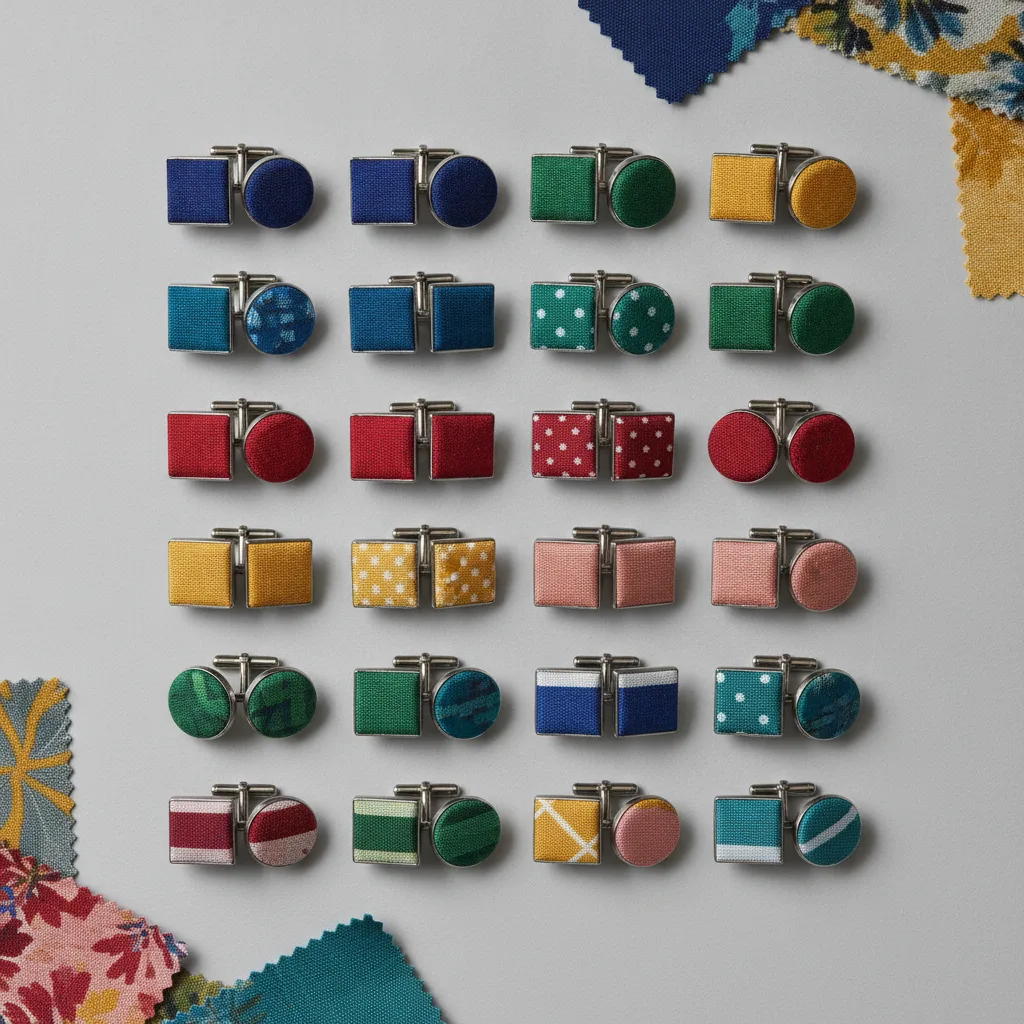
For coordination, the principle is simple: choose a colour that picks up one of the tones present in your outfit, without aiming for a perfect tonal match. A coloured fabric cufflink can quite happily stand out against a white or blue shirt, as long as the pattern is coherent with the outfit as a whole. With a dark suit, a Liberty fabric with floral patterns brings a note of whimsy without unbalancing the silhouette.
At VV elegance, we offer a selection of cufflinks organised by colour and by shape, available in our online catalogue, to make this coordination choice easier.
Personalised fabric cufflinks: having them made with your own fabric
This is one of the most frequent requests, particularly for weddings. It's entirely possible to have cufflinks made with your own fabric, provided you supply a sufficient sample to the workshop. Some French workshops work to order on this principle, mounting the customer's fabric onto a silver-toned metal base.
This made-to-measure cufflink option makes it possible, for example, to match the groom's cufflinks to the fabric of the bride's dress or veil, or to the suit's lining. It's a detail that leaves a lasting impression and fits into the high-end DIY wedding trend.
Made-in-France fabric cufflinks benefit from recognised artisanal know-how. Several French workshops offer this service with made-to-order manufacturing times, generally from a few days to two weeks depending on the quantities.
Worth remembering: for made-to-measure production from your own fabric, plan to contact the workshop in advance with a sample of at least 10 cm by 10 cm per pair of cufflinks to be made.
What budget to plan for fabric cufflinks
Fabric cufflink prices vary depending on the material, the level of personalisation and how they're made. For standard in-stock models, entry prices sit around €7.95 a pair for simple cotton or linen versions. Liberty-fabric models or personalised versions with a specific fabric are naturally more expensive, depending on the artisanal work involved.
For personalised fabric cufflinks made from the customer's own fabric, the price also depends on the quantity ordered, with some workshops offering tiered pricing from a certain number of pairs upward, which is particularly appealing for weddings with several groomsmen.
We invite you to check out our best sellers and our new arrivals on the VV elegance site to discover our current selection with up-to-date prices.
How to care for fabric cufflinks
Simple habits to preserve them
Caring for fabric cufflinks calls for a few simple but important precautions. The textile material is sensitive to moisture, stains and repeated friction, unlike a metal that can take more vigorous cleaning.
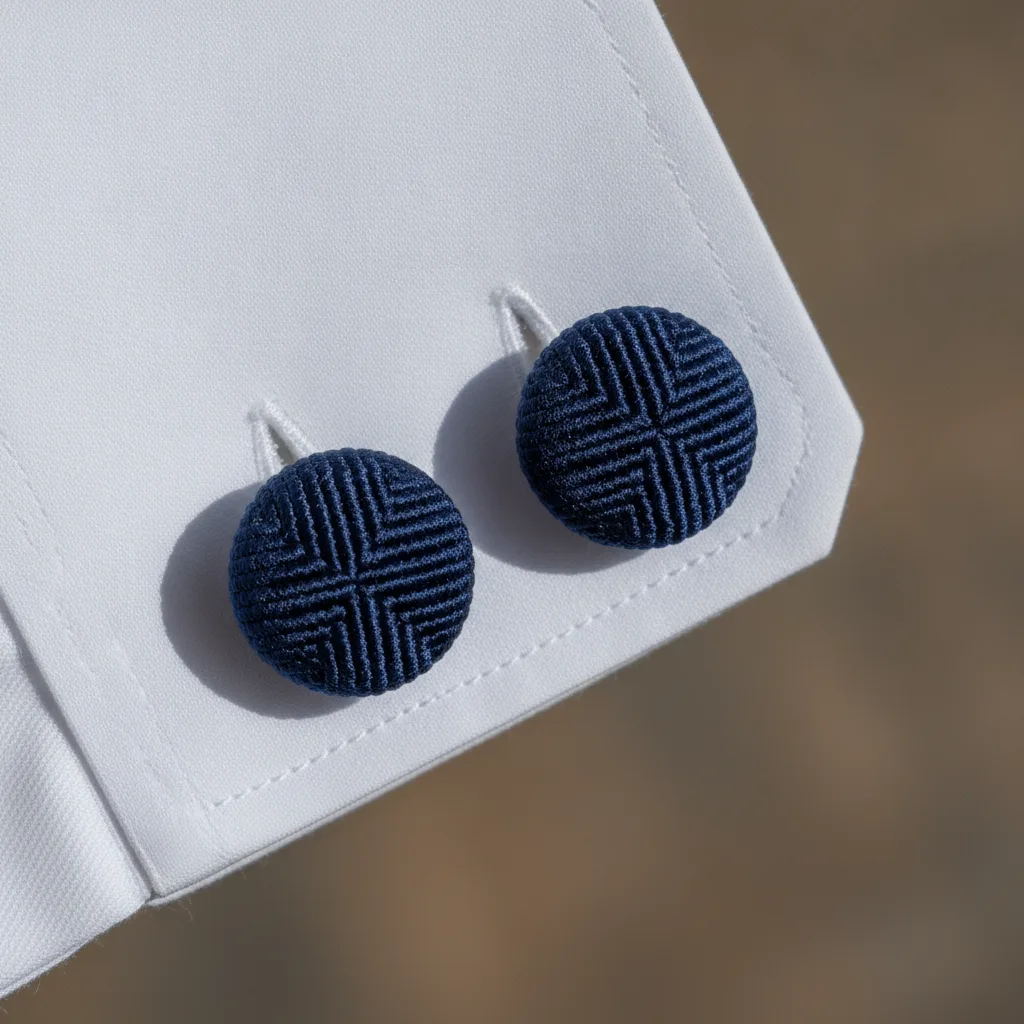
For light dirt, use a slightly damp cloth and rub very gently along the grain of the fabric. Avoid detergents, solvents and chemical cleaners, which risk discolouring or breaking down the material. For more stubborn stains, it's better to hand the piece to a textile-cleaning professional.
Storage also matters. A padded box or case protects the cufflinks from knocks, dust and direct light, which can alter the colours over time. Avoid leaving them in prolonged contact with other jewellery or metal accessories that could damage the fabric's surface.
Going further with fabric cufflinks
Fabric cufflinks represent an elegant, comfortable and deeply personalisable alternative to classic metal models. Whether it's a coloured cotton for the office, a natural linen for a summer wedding, or a Liberty fabric for a special occasion, they offer a rare freedom of style in men's accessories.
Their artisanal manufacturing, often carried out in France, and the possibility of having them made with your own fabric make them a choice that's both sensible and distinctive. At VV elegance, we've selected models that meet these standards of quality and originality, available online with several colour and shape options.
Discover our selection of fabric cufflinks, with our best sellers, our new arrivals and our gift sets.
In summary: fabric cufflinks
By choosing fabric cufflinks, you're betting on comfort, lightness and the ability to easily personalise an outfit, from the office to a wedding.
All you need to do is select the right material, a size suited to your wrist, colours consistent with your style, and plan for gentle care to enjoy this discreet but essential accessory for a long time.
FAQ
Can you wear fabric cufflinks with a classic button shirt?
No, cufflinks, whether fabric or metal, require a French-cuff shirt, also called a double cuff. This type of cuff is specially designed with buttonholes on both sides to take a cufflink. A classic button shirt can't accommodate this type of accessory.
Are fabric cufflinks suited to everyday office use?
Yes, provided you choose a sturdy material such as cotton or linen and avoid repeated rubbing against the edge of a desk. They're even more comfortable than metal models for a long day, since they don't create cold or rigid pressure on the wrist.
What's the difference between a fabric-covered cufflink and a fabric cufflink?
Both terms refer to the same type of product: a metal base over which a fabric is stretched and fixed. The phrase "fabric-covered" simply describes the manufacturing process, while "fabric" refers to the visible material. There's no product difference between the two phrasings.
Can you give fabric cufflinks as a gift?
Yes, and it's even a very well-received gift idea for a man over 40 who takes care over his style. They're ideally presented in a box or case, which makes them ready to give with no extra wrapping. You can check our selection of gift sets to find a suitable option.
Are fabric cufflinks suited to an outdoor wedding?
Yes, particularly linen or cotton models, which hold up well to heat and stay light throughout the day. For an outdoor wedding, favour light colours or discreet floral patterns that go with a summer suit. Avoid silk if you're expecting prolonged exposure to sun or humidity.