Silk-knot trim is one of the best-kept secrets in menswear for anyone wondering how to wear it without looking like they're in costume. Braids, fringing, tassels, decorative plaits: these textile ornaments have travelled through the centuries without ever truly disappearing, and today they're making a comeback with renewed force in men's ready-to-wear.
Yet many men hesitate to take the plunge, fearing they'll look like they're in fancy dress, or that they'll overdo it. This guide explains how to wear silk-knot trim with precision, based on your style, your build and the occasion.
How to Wear Men's Silk-Knot Trim | Style Guide
Reading time: ~9 min
- What is silk-knot trim in menswear?
- The fundamental style rules
- Choosing your silk-knot trim based on the occasion
- Wearing silk-knot trim day to day: casual-chic and office
- Wearing silk-knot trim in the evening or at a formal event
- How do you care for a garment decorated with silk-knot trim?
- Where can you buy quality silk-knot trim in France?
- Going further with men's silk-knot trim
- FAQ
What is silk-knot trim in menswear?
Definition and history of silk-knot trim
Silk-knot trim refers to the whole family of textile ornaments made from braided, knotted or interwoven threads: braids, decorative fringing, textile tassels, pompoms, braided cords, decorative plaits, gimp trim and ornate ribbons.
The Encyclopédie of Diderot and d'Alembert, published in 1751, defines it as the art of making numerous small works called passemens, narrow pieces intended to decorate clothing or furniture. The Fashion History Timeline at New York's FIT describes it as a set of trimmings in silk or metallic thread, used as a border or decoration on garments.
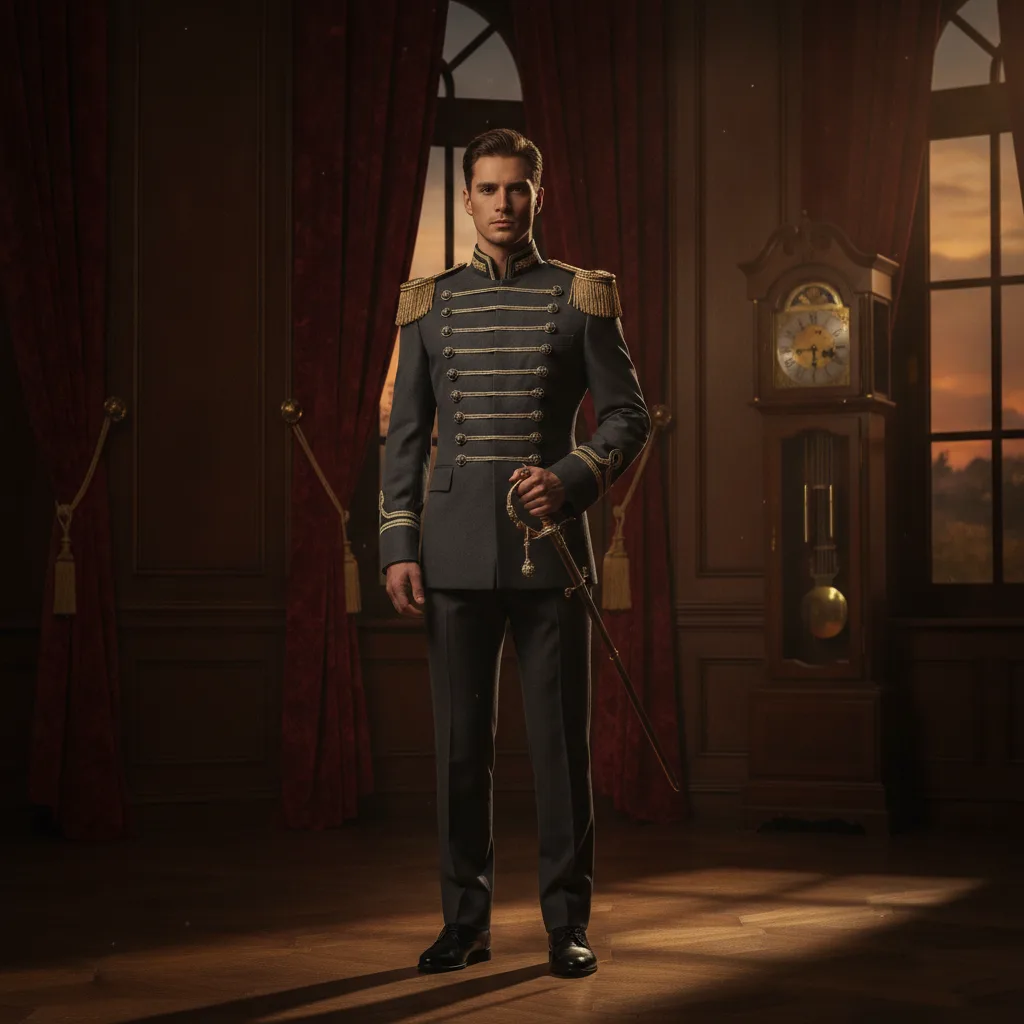
Historically, silk-knot trim has been a marker of social status. The Paris guild of passementiers, established as early as the 17th century, produced ornaments for royal, aristocratic, religious and military ceremonial dress. Epaulettes, metallic-thread trim, braided fastenings on uniforms: these elements signalled the rank of the wearer. Today, this heritage gives silk-knot trim an air of sophistication that contemporary menswear reinterprets with intelligence.
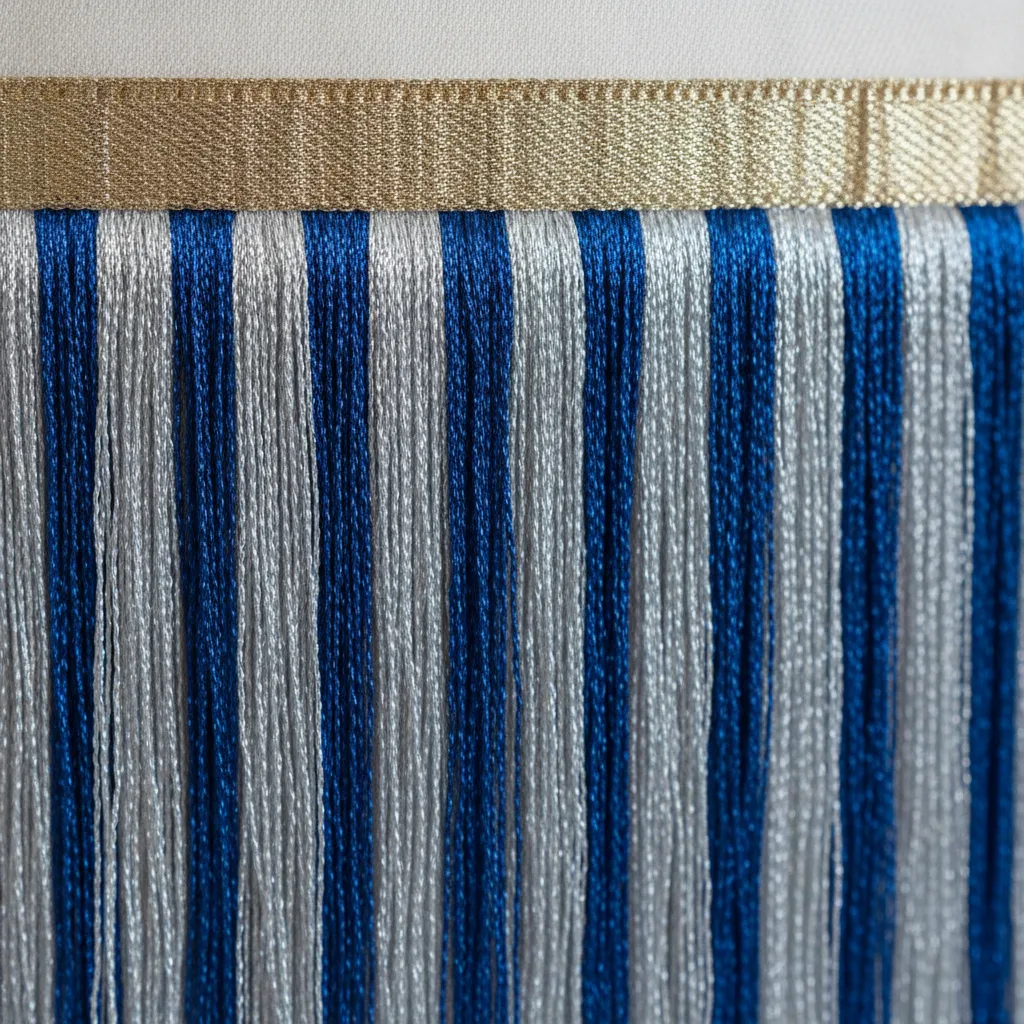
The main types of ornament you'll come across in menswear are braids (woven bands applied to the edges of a garment), decorative fringing (rows of threads hanging from an edge), textile tassels (hanging ornaments with a knotted head), pompoms (balls of thread), braided cords (decorative ties) and decorative plaits (interwoven patterned bands).
The fundamental style rules
How do you wear men's silk-knot trim without looking like you're in costume, or overdoing it? Three simple rules will get you there.
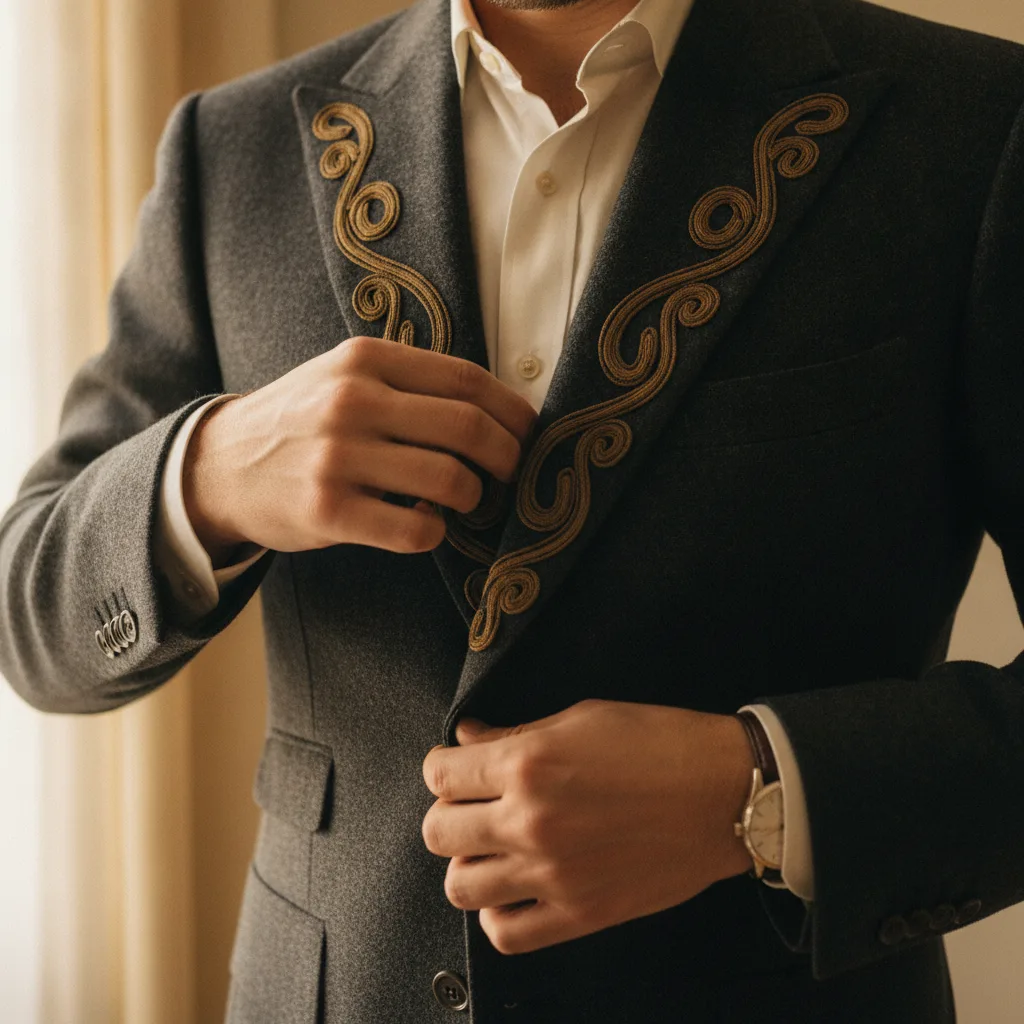
- Start tone-on-tone: choose braids or plaits in a shade very close to the main fabric. A navy blazer with a midnight-blue braid on the lapels or around the pockets creates a discreet tailoring effect, instantly reading as intentional.
- Balance the silhouette: if the trim is bold (long fringing, large tassels), the rest of the outfit should stay minimalist. Conversely, narrow braids or small pompoms let you add several decorative touches without breaking the visual harmony.
- Treat silk-knot trim as a tailoring detail: a discreet braid along the edge of a cardigan or coat is enough to set an ordinary outfit apart from a considered one. The goal is to place one or two ornaments in the right spots, not to cover the garment.
Choosing your silk-knot trim based on the occasion
The table below helps you choose the right type of silk-knot trim based on the occasion and the level of visual impact you're after.
| Type of ornament | Visual impact | Recommended occasion | Ideal placement |
|---|---|---|---|
| Thin tone-on-tone braid | Discreet | Office, casual-chic | Jacket lapels, button placket, cuffs |
| Contrasting decorative plait | Moderate | Casual-chic, weekend | Jacket edges, pockets, collar |
| Metallic-thread braid | Strong | Evening, formal event | Epaulettes, lapels, panel inserts |
| Short decorative fringing | Moderate | Casual, festival | Jacket hem, sleeves, belt |
| Textile tassel or pompom | Strong | Evening, editorial look | Cord ties, fastenings, accessories |
Wearing silk-knot trim day to day: casual-chic and office
Casual-chic outfit ideas with silk-knot trim
Is silk-knot trim suited to a men's office look? Yes, as long as you stay understated. A blazer with tone-on-tone braids, paired with raw denim and loafers, makes a perfectly balanced casual-chic outfit. The braid adds a tailoring touch without weighing down the ensemble.
You could also opt for a white shirt with a contrasting braid on the central button placket, paired with black cigarette trousers: the effect is graphic, inspired by 19th-century decorative trimmings, and entirely suited to a creative professional setting.
For a more classic office look, a thin braided cord around the collar of a polo shirt, or an embroidered braid on the cuffs of a structured jacket, is enough to set your outfit apart without breaking the company's dress code. The key is that the rest of the outfit stays perfectly understated.
Good to know: men's silk-knot trim has its roots in military uniforms and the ceremonial dress of the French court. Reinterpreting these codes today in a civilian context means joining a long tradition of distinction through detail.
Wearing silk-knot trim in the evening or at a formal event
Evening look ideas with silk-knot trim
Evening silk-knot trim for men offers particularly rich possibilities. A blazer with metallic-thread braids on the lapels or epaulettes, paired with understated tailored trousers and a plain top, directly echoes the status-signalling function of ceremonial trimmings while staying perfectly contemporary. It's the kind of look that leaves a lasting impression at a dinner, a wedding or an event evening.
For those who want to go further, a look with tassels and pompoms on accessories — a suit pocket square adorned with a textile tassel, or a belt with a braided cord — lets you introduce silk-knot trim into a formal outfit without touching the main garment. It's an ideal starting point for men over 40 wanting to refine their style without overhauling their wardrobe.
Worth remembering: in the evening, favour metallic-thread or silk trims for their natural shine under artificial light. They catch the light subtly, adding a precious dimension to your silhouette with no extra effort.
How do you care for a garment decorated with silk-knot trim?
Care precautions for silk-knot trim
Delicate textile care is a crucial point often overlooked. Silk-knot trim is made from a range of materials: silk, wool, linen, synthetic fibres or metallic threads. The basic principle is to adapt the care routine to the most delicate material present on the garment, which is usually the ornament itself rather than the main fabric.
Favour hand-washing or dry cleaning for any garment featuring decorative fringing, textile tassels or metallic-thread braids. The three-dimensional nature of these ornaments makes them prone to tangling and distortion in the washing machine. Always iron on the reverse and with a damp pressing cloth, avoiding any direct contact between the sole plate and the braids or fringing: metallic threads and certain synthetic fibres can't withstand high temperatures.
| Symptom | Likely cause | Solution |
|---|---|---|
| Fringing coming undone | Threads loosened by rubbing or unsuitable washing | Re-tie or re-braid the end, then secure with a few invisible stitches in matching thread |
| Braid partially unstitched | Original fastening weakened by wear | Hand-sew it back with fine, even backstitches, following the pattern precisely |
Where can you buy quality silk-knot trim in France?
Several options are available to find quality menswear silk-knot trim in France. Online, specialist haberdasheries offer hundreds of references: macramé-style crochet braids, plaits, decorative fringing, ornate ribbons, with prices ranging from a few euros to over a hundred depending on quality and composition. The Sentier district in Paris remains the historic reference for in-store purchases. Elsewhere in France, a house founded in 1921 combines a historic shop with online sales.
At Une Autre Paire De Manche, we also offer a selection of silk-knot trim and men's accessories directly on our site. You can browse our new arrivals or check our best sellers to find the ornaments that match your style. Our selection of silk-knot pieces brings together braids, plaits and ornaments designed to complete a man's outfit with elegance.
To refine your search, our categories dedicated to the colour or shape of the ornaments let you browse the available references with ease. If you'd like to give a gift set, our shop is organised to make your choice easier.
Going further with men's silk-knot trim
Wearing silk-knot trim with style isn't reserved for fashion insiders. It's above all a question of balance: choosing the right ornament, placing it in the right spot, and letting the rest of the outfit breathe.
Whether you opt for a discreet braid on an office blazer or a textile tassel on an evening accessory, silk-knot trim offers a concrete way to set your style apart without excessive effort. It belongs to a French artisan tradition several centuries old, and deserves to be rehabilitated in the contemporary male wardrobe.
Summary: how to wear silk-knot trim day to day
By combining well-chosen ornaments, strategic placement and suitable care, you can wear silk-knot trim with confidence, whether at the office, in the evening, or on your more casual outfits, all while staying true to your personal style.
FAQ
What's the difference between a braid and decorative fringing?
A braid is a woven or plaited band applied flat onto a garment, generally along an edge. Decorative fringing is made of threads hanging freely from an edge, which gives it movement and volume that a braid doesn't have. Both are types of silk-knot trim, but their visual effect and their placement on a garment differ.
Does silk-knot trim suit every male body type?
Yes, as long as you adapt the placement. For a slim silhouette, horizontal braids on the chest or shoulders add volume in a controlled way. For a fuller silhouette, vertical braids on the button placket or lapels visually elongate the silhouette. The key is to avoid overly bulky ornaments on areas you'd rather not draw attention to.
Can you add silk-knot trim to an existing garment yourself?
Yes, it's entirely doable with a minimum of sewing practice. Braids and plaits are generally applied by hand or by machine with a fine straight stitch. It's recommended to test the application on a fabric offcut before sewing onto the final garment, and to choose a sewing thread matched to the colour of the braid rather than the fabric.
Is silk-knot trim a passing trend or a classic?
Silk-knot trim has existed since antiquity and has survived every century without disappearing, adapting to the codes of each era. It's not a fleeting trend but a tailoring classic, which goes through cycles of greater or lesser popularity depending on the season and the collections. Investing in quality pieces decorated with silk-knot trim is therefore a lasting choice.
How do you tell quality silk-knot trim from a low-end ornament?
Quality silk-knot trim has an even weave, well-tensioned threads with no visible loops, and is made from fine materials such as silk, cotton or genuine metallic thread. A low-end ornament is recognisable by its irregularity, excessive stiffness, or an artificial-looking shine. The composition shown on the label or product sheet is the first thing to check before buying.
Nos boutons de manchette en rapport
Sélection en lien avec ce guide