

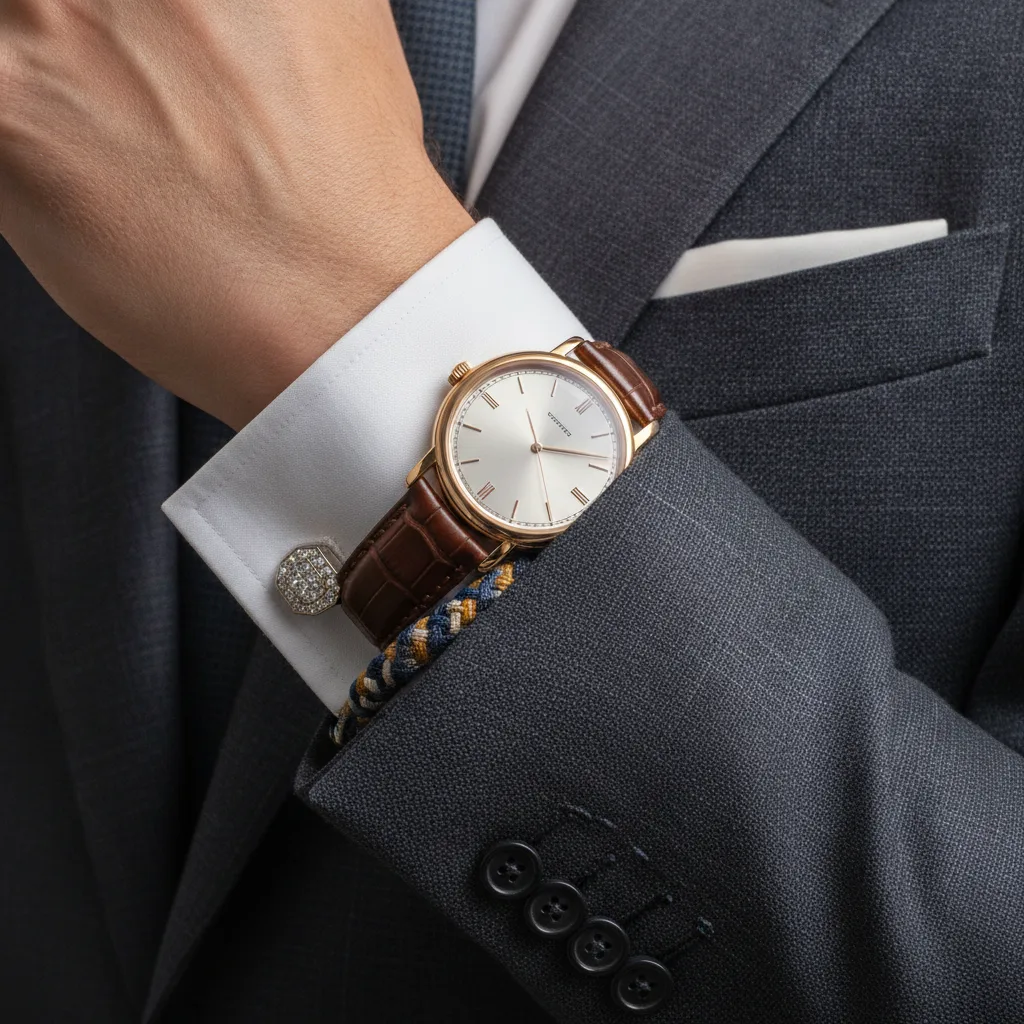
When it comes to men's elegance, the details make all the difference. Among the wrist accessories that set a well-groomed man apart from a merely dressed one, two options have been competing for centuries: silk-knot trim or cufflinks.
One belongs to the world of textile art and artisanal craftsmanship, the other embodies the ultimate wrist jewellery. This article guides you step by step to settle this contest with elegance, based on your style, your budget and the occasion.
Silk-Knot Trim or Cufflinks | Which Should You Choose
Reading time: ~9 min
- Silk-knot trim or cufflinks: two worlds, one shared ambition
- Silk-knot trim: the textile ornament in service of style
- Cufflinks: the jewellery that makes the difference
- When to choose silk-knot trim over cufflinks?
- Care and storage: preserving your accessories over time
- Where to find quality cufflinks and silk-knot trim?
- Going further with silk-knot trim or cufflinks
- FAQ: frequently asked questions about silk-knot trim and cufflinks
Summary at a glance
- Silk-knot trim vs cufflinks: definitions, history and role in men's and women's fashion.
- When to wear each: the occasions that call for one or the other, from the office to formal ceremonies.
- How to choose your cufflinks: criteria of material, style and budget.
- Silk-knot trim in practice: how to use it to personalise a garment.
- Care and storage: best practices for preserving your accessories over time.
Silk-knot trim or cufflinks: two worlds, one shared ambition
Definition of silk-knot trim
Silk-knot trim refers to the whole family of textile ornaments made from silk, wool, metal or synthetic threads: braids, gimp, fringing, tassels, plaits, cords, pompoms, piping.
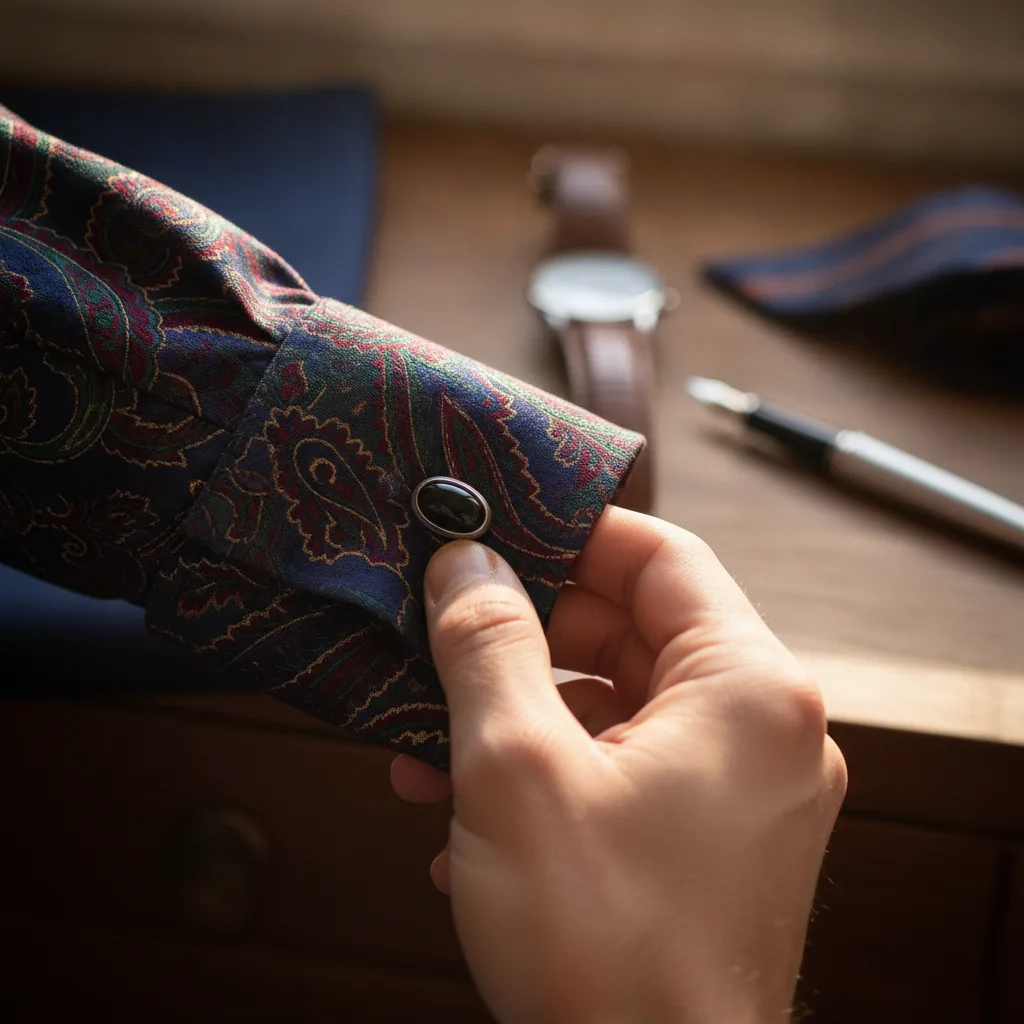
This art, already described in the 18th century in Diderot and d'Alembert's Encyclopédie as "the art of making a great many small" decorative works, applies just as much to clothing as to furnishing. The Fashion History Timeline at New York's FIT defines it as a trimming — a decorative embellishment that enriches the texture, light and character of a textile piece.
Definition of the cufflink
The cufflink, meanwhile, is a menswear accessory in its own right. Its primary function is to hold closed the French cuffs, also called double cuffs, of a dress shirt. But beyond this utility, it acts as a genuine piece of wrist jewellery, a concentrate of elegance that signals the care taken in one's appearance. Precious metal, stones, enamel, wood, silk: the materials are as varied as the styles, from the most classic to the most whimsical.
These two worlds share a common ambition: turning an ordinary garment into a piece that says something about the person wearing it.
Silk-knot trim: the textile ornament in service of style
Silk-knot trim is often associated with haute couture and the great fashion houses, but it has also run through high-end ready-to-wear for centuries. Manufacturers such as Manifattura Modenese in Italy or the French company Effet Passementeries work for the biggest fashion houses, producing hand-shaped gimp, braided ribbons, braids and lace insertions. These textile ornaments turn up on jacket edges, dress hems, coat collars, and even stage costumes and ceremonial dress.
Techniques and effects of silk-knot trim
The manufacturing techniques are numerous: weaving, knotting, braiding, twisting, beading. They make it possible to create raised, three-dimensional ornaments that bring a haute-couture finish to any piece. A gold braid on a jacket lapel, silk piping on a pocket, fringing on a skirt hem: all details that speak to artisanal craftsmanship and garment personalisation.
Good to know: silk-knot trim isn't reserved for sewing professionals. It's entirely possible to buy braids, cords or plaits at a haberdashery to customise an existing garment yourself. A braid sewn onto a shirt collar, or a cord replacing the laces on a jacket, is enough to turn a basic piece into a personalised item.
For men over 40 looking to refine their wardrobe without committing to a major investment, silk-knot trim offers an accessible entry point. It particularly suits casual or summer outfits: a linen blazer trimmed with a contrasting braid, a cotton suit finished with discreet piping. At Une Autre Paire De Manche, you'll find a selection of silk-knot pieces suited to this use.
Cufflinks: the jewellery that makes the difference
Men's cufflinks are the tailoring accessory par excellence for formal outfits. They can only be used with a dress shirt fitted with French cuffs, or double cuffs — that is, a cuff with no sewn-on button, designed to be folded back and held by an external accessory. This technical constraint is also an invitation to style: it forces you to choose, to coordinate, to assert a personality.
The main types of cufflinks
Cufflinks come in several broad families. Classic models in polished or brushed metal suit any professional or formal context. Enamel, mother-of-pearl or semi-precious-stone versions bring a touch of colour and character. Novelty cufflinks with themed motifs are aimed at those who want to express a passion or a strong personality. Finally, models in precious metals such as white or yellow gold belong to fine jewellery and represent a long-term investment.
| Type of cufflink | Main material | Recommended occasion | Indicative budget |
|---|---|---|---|
| Classic | Stainless steel, silver | Office, meetings, everyday formal wear | €20 to €80 |
| Enamel or mother-of-pearl | Metal and enamel / mother-of-pearl | Evening, cocktail, ceremony | €50 to €150 |
| Novelty / themed | Metal, resin, wood | Casual-chic, festive event | €20 to €100 |
| Fine jewellery | Gold, diamonds, precious stones | Wedding, gala, official ceremony | €200 and above |
| Silk-knot trim (silk knot) | Silk, cotton, braided linen | Casual, summer, smart-casual | €10 to €40 |
For a wedding, a gala or ceremonial dress, an elegant metal or stone cufflink is the natural choice. For a business lunch or an important meeting, a sober steel or silver model is enough to mark distinction without ostentation.
Worth remembering: a braided-silk cufflink is technically a form of silk-knot trim applied to the wrist accessory. This type of model, sometimes called a knot cufflink, bridges the two worlds and makes an ideal option for casual-chic outfits or summer days.
When to choose silk-knot trim over cufflinks?
The question of silk-knot trim or cufflinks arises differently depending on the outfit's context. Cufflinks are inseparable from the French cuff: without that specific shirt, they have no reason to exist. Silk-knot trim, on the other hand, applies to any garment, regardless of cut or fabric.
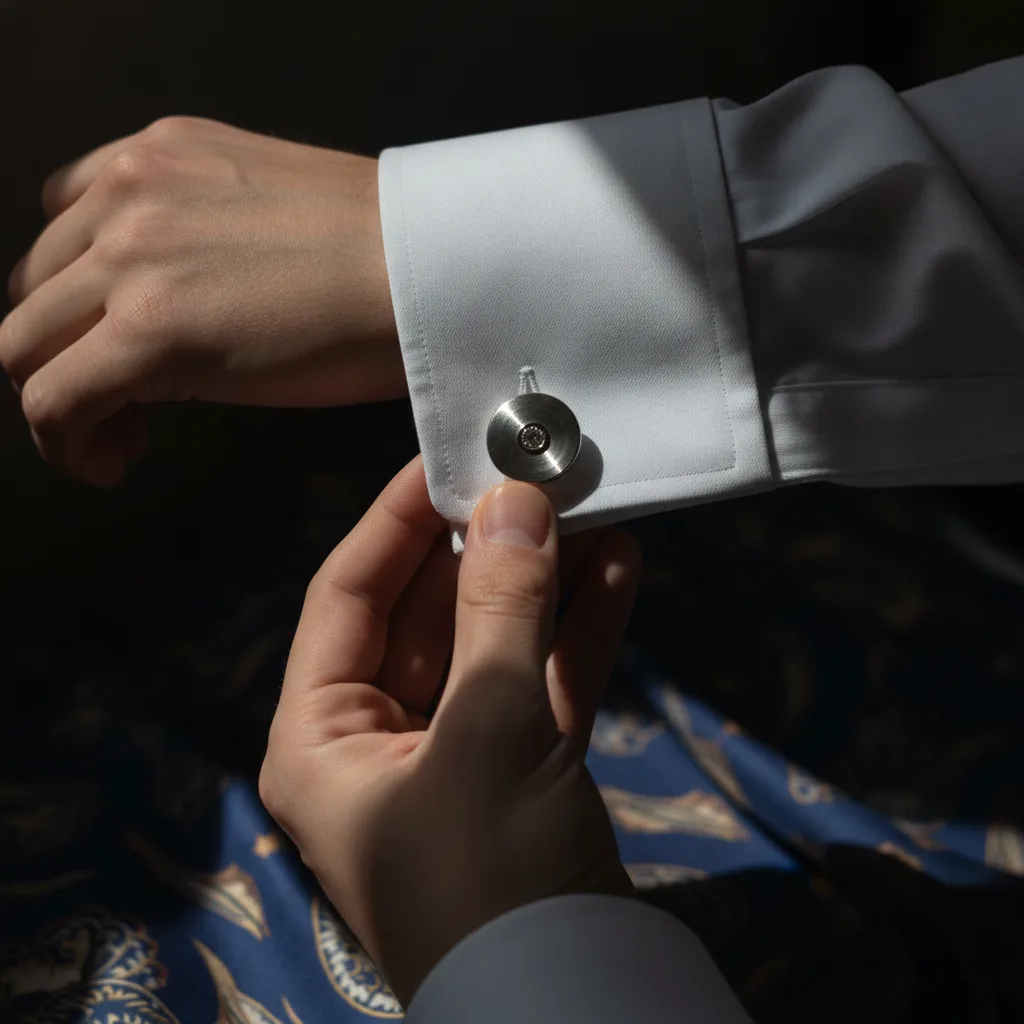
Choose silk-knot trim if you want to personalise an existing garment, bring an artisanal touch to a casual or summer outfit, or if you're looking for an affordable way to enrich your wardrobe without changing shirts. It's particularly well suited to casual-chic looks, considered weekend outfits, or linen jackets worn without a tie.
Choose cufflinks if you're wearing a French-cuff shirt, if the occasion is formal or ceremonial, and if you want to assert a style honed down to the smallest detail. It's the tailoring accessory par excellence for men who take care over their elegance, both at the office and in the evening.
For married women looking for a refined gift for their partner, cufflinks represent a safe and customisable option. Une Autre Paire De Manche offers a selection of best sellers designed for this occasion.
Care and storage: preserving your accessories over time
Whether you opt for cufflinks or silk-knot ornaments, regular care extends their lifespan and preserves their appearance.
For metal cufflinks, a soft, slightly damp cloth is enough for most routine cleaning. For silver models, a dedicated silver-care product helps fight oxidation. Cufflinks set with natural stones or pearls need more care: avoid chemical products and immersion in water. Storing them in an individual case or a padded box protects the surfaces from scratches and dust. Humidity is the main enemy of precious metals and stones: keep your cufflinks in a dry place, away from direct light.
For silk-knot ornaments, silk and delicate fibres should be stored flat or loosely rolled to avoid distortion. Dry cleaning is recommended for pieces decorated with metallic thread or elaborate tassels. Braids sewn onto a garment follow the care instructions of the main fabric.
Une Autre Paire De Manche offers a selection of storage boxes suited to your cufflinks, available on our gift sets page.
Where to find quality cufflinks and silk-knot trim?
For cufflinks, several types of channels exist. Multi-brand luxury platforms offer designer models at premium prices. Menswear brands offer accessible collections with regular promotions. Online jewellers give access to precious-metal models with personalisation options. The second-hand and vintage market, through specialist platforms, also makes it possible to find rare pieces at reduced prices.
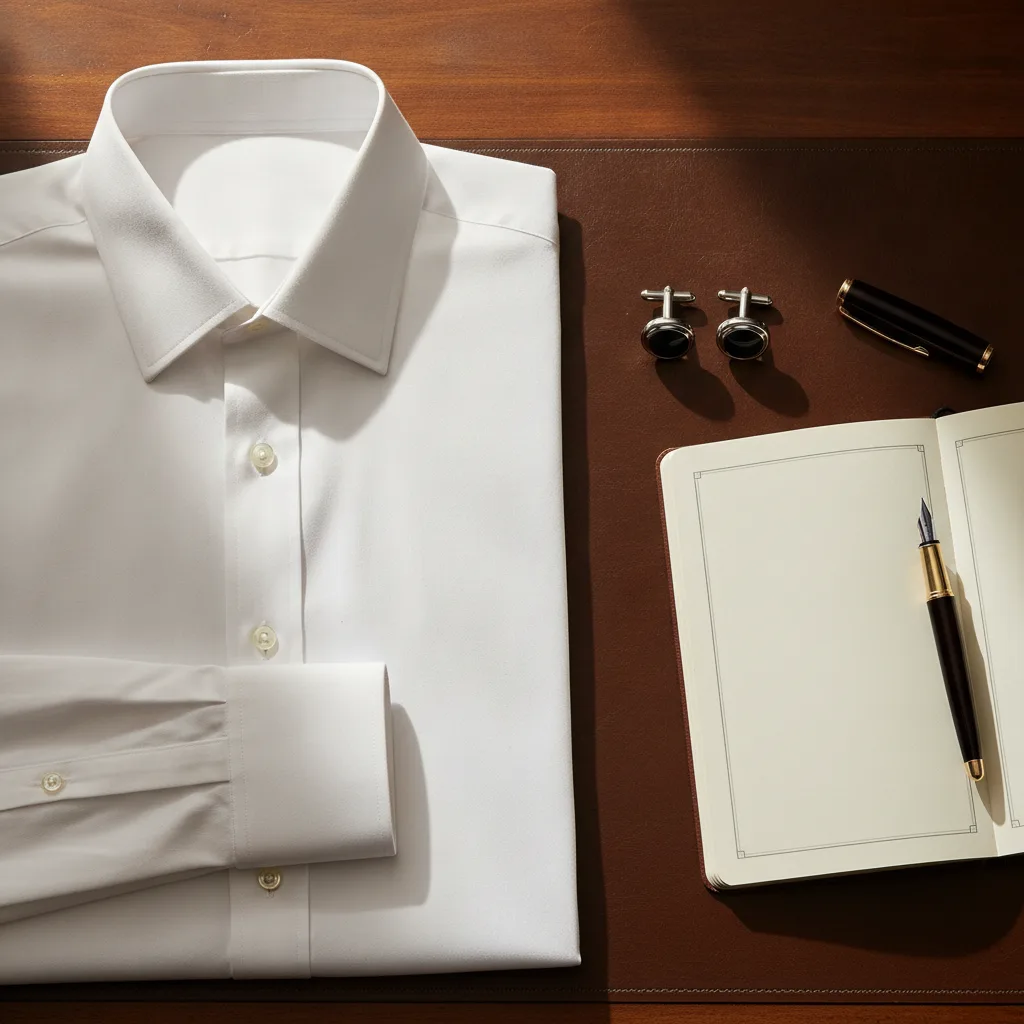
At Une Autre Paire De Manche, we've selected the most sought-after models for you, along with themed collections and regular new arrivals. Our sale items make it possible to access quality pieces at competitive prices.
For silk-knot trim, specialist houses such as Effet Passementeries in France or Manifattura Modenese in Italy cater mainly to sewing professionals and fashion houses. For personal use, online haberdasheries and fabric shops offer braids, cords and plaits sold by the metre, accessible to every budget.
Going further with silk-knot trim or cufflinks
Silk-knot trim and cufflinks aren't really opposites: they answer different needs and complement each other in a well-built men's wardrobe. Cufflinks reign over formal and ceremonial outfits, bringing that touch of wrist jewellery that sets apart men who know how to dress.
Silk-knot trim, meanwhile, opens up a freer, more creative field of personalisation, suited to casual or summer outfits. Whichever you choose, the essential stays the same: take care of the details, because they're what make the difference.
Looking to find the perfect pair? Explore our men's cufflinks, with fast delivery and free exchanges.
FAQ – Frequently asked questions about silk-knot trim and cufflinks
Which shirt should you wear to put on cufflinks?
Only shirts fitted with a French cuff, also called a double cuff, allow you to wear cufflinks. This type of cuff is folded back on itself and has no sewn-on button: it's designed to be held by an external accessory.
Can silk-knot trim be used on a men's shirt?
Yes, absolutely. A thin braid sewn onto the collar, discreet piping on the buttonholes, or a braided cord used as a collar tie are all ways of incorporating silk-knot trim into a men's shirt. These textile ornaments are particularly well suited to linen or cotton shirts worn without a tie.
Is it possible to wear cufflinks in a casual professional setting?
Yes, provided you choose sober, discreet models. A brushed-steel or matte-silver cufflink fits perfectly into a work environment without looking too formal. The key is that the shirt is suited to the context.
Are cufflinks reserved exclusively for men?
No. While this accessory is historically associated with menswear, it's now also worn by women who choose French-cuff shirts for their wardrobe. Some fashion houses even offer unisex or specifically feminine models.
How do you know if a cufflink is good quality?
Several indicators help assess the quality of a cufflink: the sturdiness of the closing mechanism (it should open and close without forcing), the finish of the surfaces (no burrs or sharp edges), the nature of the materials (solid rather than hollow metal, cleanly set stones), and the reputation of the manufacturer or brand.
Can you give cufflinks as a gift without knowing the recipient's style?
Yes, by opting for classic, versatile models: a round or square cufflink in stainless steel or silver suits most styles and occasions. A gift set including several pairs also gives the recipient more flexibility.