

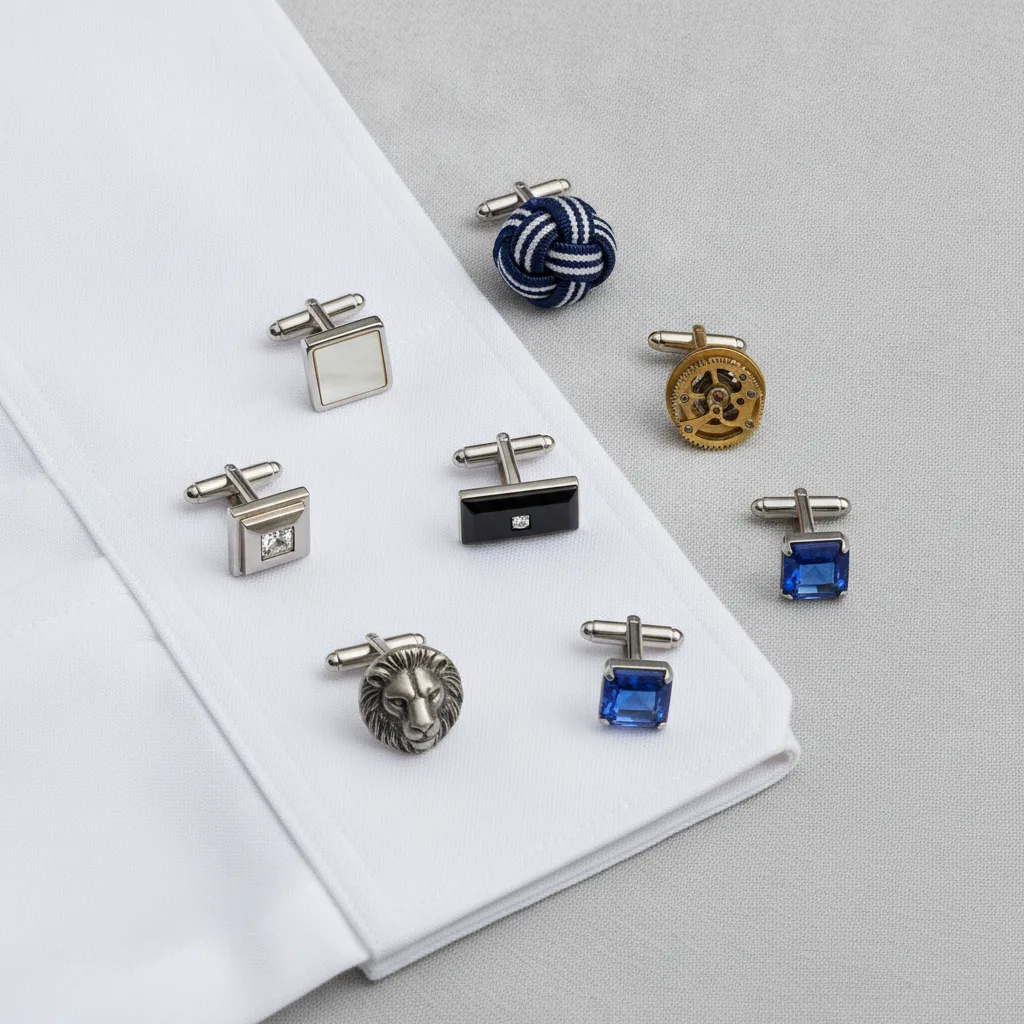
Cufflink types have evolved a great deal, but their role remains the same: to elegantly close a shirt cuff and express your style. Past 40, every detail counts, especially for a suit, a tuxedo or any formal outfit. Understanding the different closure mechanisms (fish-tail, T-bar, chain, stud, silk knot...) saves you from disappointing purchases and fiddly handling.
This 2026 guide presents the seven main types of closures, their practical advantages, the occasions they suit and the type of wearer they're best for. The goal: choose practical, durable and elegant designs without getting lost in jargon, and learn to spot quality finishes when you buy your next pair of cufflinks.
The 7 Types of Cufflink Closures: Which One Should You Choose in 2026?
Reading time: ~13 min
- Contents
- A quick refresher on cufflinks
- The 7 types of cufflink closures to know
- Which type of closure to choose based on how you'll use it in 2026
- Material and shape: allies of the right closure
- How to recognise a quality closure
- FAQ
- Summary: choosing your cufflinks well in 2026
A quick refresher on cufflinks
A cufflink is a decorative fastener that replaces the ordinary button on shirts with French or double cuffs. It combines two functions: practical (closing the sleeve) and aesthetic (asserting elegance, status and personality). In practice, it links the cuff's two slits through the buttonholes, so comfort depends directly on the type of closure.

The 7 types of cufflink closures to know
1. Swivel-bar closure (fish-tail, T-bar)
The most common type: a decorative face, a straight post and a small movable bar. You slide the post through the buttonholes, then rotate the bar 90° to lock it in place. Pros: very easy to fit, reliable hold all day, ideal for frequent use. Cons: the mechanism can loosen over time if the quality is poor; the back isn't always the most attractive. Best for: a man in a hurry, everyday business wear. In 2026, look for dense metal and a smooth rotation.
2. Bullet-back closure
A variant of the T-bar, where the moving part is a small pivoting cartridge shape. Same mechanism, with a more distinctive look and often a sturdier feel. Cons: slightly thicker; the difference is mainly aesthetic. Best for: city suits, smart dinners, important meetings.
3. Chain-link cufflinks
Two identical faces linked by a small chain. You pass one face through, the chain sits in the middle, and the other face rests flat on the opposite side. Pros: refined look (two decorated faces), great flexibility and comfort, a vintage feel. Cons: takes longer to fit, less practical on snug cuffs. Best for: the aesthete, ceremonies where you take your time getting dressed.
4. Ball-back closure
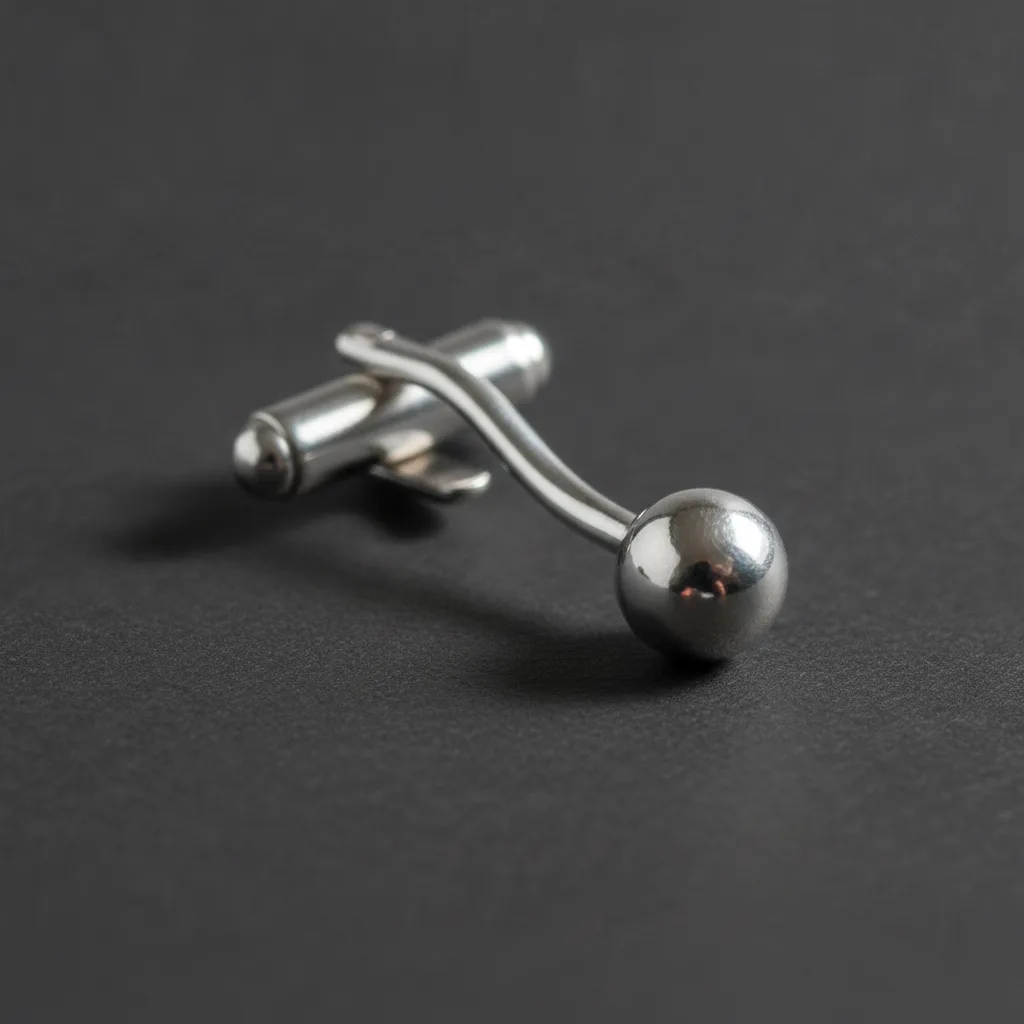
Often a rounded top face, with a small back ball connected by a curve. The ball is inserted at an angle; its shape creates the tension that holds it. Pros: a secure fastening, an organic line, great comfort. Cons: the gesture is less intuitive, and entry-level options are limited. Best for: lovers of beautiful objects, high-end business wear or evening events.
5. Stud closure
Works like a shirt button: a decorative head and a narrow base that you insert. Pros: a clean look suited to a tuxedo, a reliable hold, and it can be coordinated with dress-shirt studs. Cons: less intuitive for beginners, mostly a formal option. Best for: black tie, weddings, galas.
6. Silk knot
Two small braided knots linked by a cord. Pros: lightweight, silent, a wide colour range, and an affordable price. Cons: less durable than metal, a more casual register. Best for: smart-casual, an informal day at the office, after-work drinks.
7. Fixed or rigid closure
No moving parts: the decorative face and the back element form a single piece. You pass the back through the buttonholes; its rigidity holds everything in place. Pros: virtually indestructible, a considered design along its whole length, and extremely simple mechanics. Cons: can be tricky to thread through narrow buttonholes, and needs a well-suited shirt. Best for: anyone looking for longevity and simplicity.
Which type of closure to choose based on how you'll use it in 2026
Comparing closures for everyday situations
| 2026 situation | Recommended closure | Why |
|---|---|---|
| Everyday office wear | T-bar or bullet-back | Speed, reliability, wide choice |
| Tuxedo / gala | Stud or understated chain | Respects dress codes, discreet |
| Smart-casual | Silk knot or design ball-back | Colour, confident flair |
| Sartorial details | Chain, ball-back or premium rigid | Refinement, comfort |
| Beginner | Classic T-bar | Intuitive to use |
To see these mechanisms in detail and compare finishes, browse the Une Autre Paire De Manche collection: /en/
Material and shape: allies of the right closure
Choosing the shape that suits your style
Understated shapes (round, square, rectangular, cylindrical metal) remain the easiest to wear with a business suit or formal outfit. Themed shapes (a car, an instrument, a symbol of a passion) are appealing, but can feel out of place at a wedding or a formal meeting — use them sparingly.
Choosing the right material for your cufflinks
On the material side: precious or plated metal (gold, silver, rhodium-plated steel) suits both formal wear and smart everyday looks; silk brings colour and a relaxed feel; wood, resin or coloured enamel work well when dress-code constraints are looser.
How to recognise a quality closure
What makes a quality cufflink closure
A smooth mechanism (a post that pivots without play or creaking), a consistent weight (no hollow metal), clean finishes (no sharp edges, no visible glue), flawless soldering on chains or ball-backs, and a dense cord on silk designs — these are the marks of a purchase built to last. Three or four flawless pairs are worth more than a whole collection of low-end designs.
FAQ
Which type of cufflink closure is the easiest to use?
The swivel-bar closure, also known as a T-bar or fish-tail, is generally the most intuitive. It slides quickly through the buttonholes and locks with a simple twist, which makes it very practical for everyday wear at the office.

Which closure should you choose for a tuxedo or a gala outfit?
For a tuxedo, the stud closure remains a safe choice, since it follows black-tie conventions and offers a very clean line. A sober, understated chain can also work, as long as you stick to classic materials such as gold, silver or rhodium-plated steel.
How do you make your cufflink closures last?
Wipe your cufflinks regularly with a soft cloth after wearing them, store them away from humidity, and avoid harsh products on metals and silk. Handling the mechanism gently, without forcing it, limits wear on moving posts and chains.
Summary: choosing your cufflinks well in 2026
In 2026, cufflinks are no longer reserved for special occasions. Between T-bar, bullet-back, chain, ball-back, stud, silk knot or rigid closures, you can tailor your choice to your shirts, your lifestyle and your events. Always favour mechanical reliability and careful finishing — you'll gain in both comfort and presence. To refine your selection, explore the Une Autre Paire De Manche range at Une Autre Paire de Manches and build a small, coherent collection suited to business, ceremonies and more relaxed moments.