

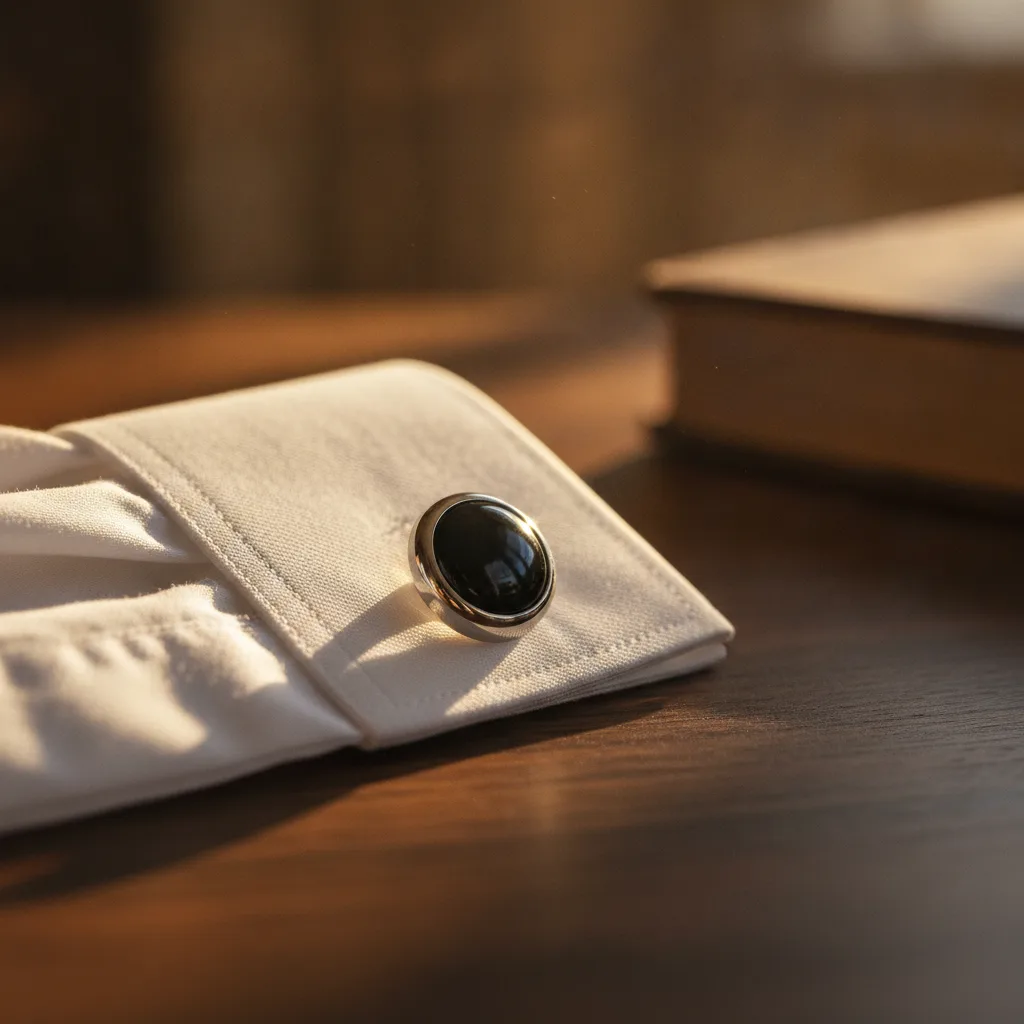
Discreet to the untrained eye, essential to the initiated, the cufflink is one of the rare details capable of turning a simple shirt into a genuine statement of style. Behind this small piece of jewellery lies a fascinating history, blending royalty, the industrial revolution, fine jewellery and contemporary whimsy. Understanding the history of the cufflink also means understanding the evolution of men's — and today, unisex — elegance. Here's how this accessory travelled from the wrists of kings to your own wardrobe.
The Surprising History of the Cufflink: From Royalty to Your Wrist
Reading time: ~15 min
- Definition and role of the cufflink
- The origins of the cufflink's history
- Royalty, nobility and a symbol of status
- The 19th century, the industrial revolution and democratisation
- The 20th century, between peak, decline and revival
- Modern typology and practical use
- Stylistic and social meanings today
- FAQ
Definition and role of the cufflink
Before diving into the history of the cufflink, it's worth recalling exactly what it is.
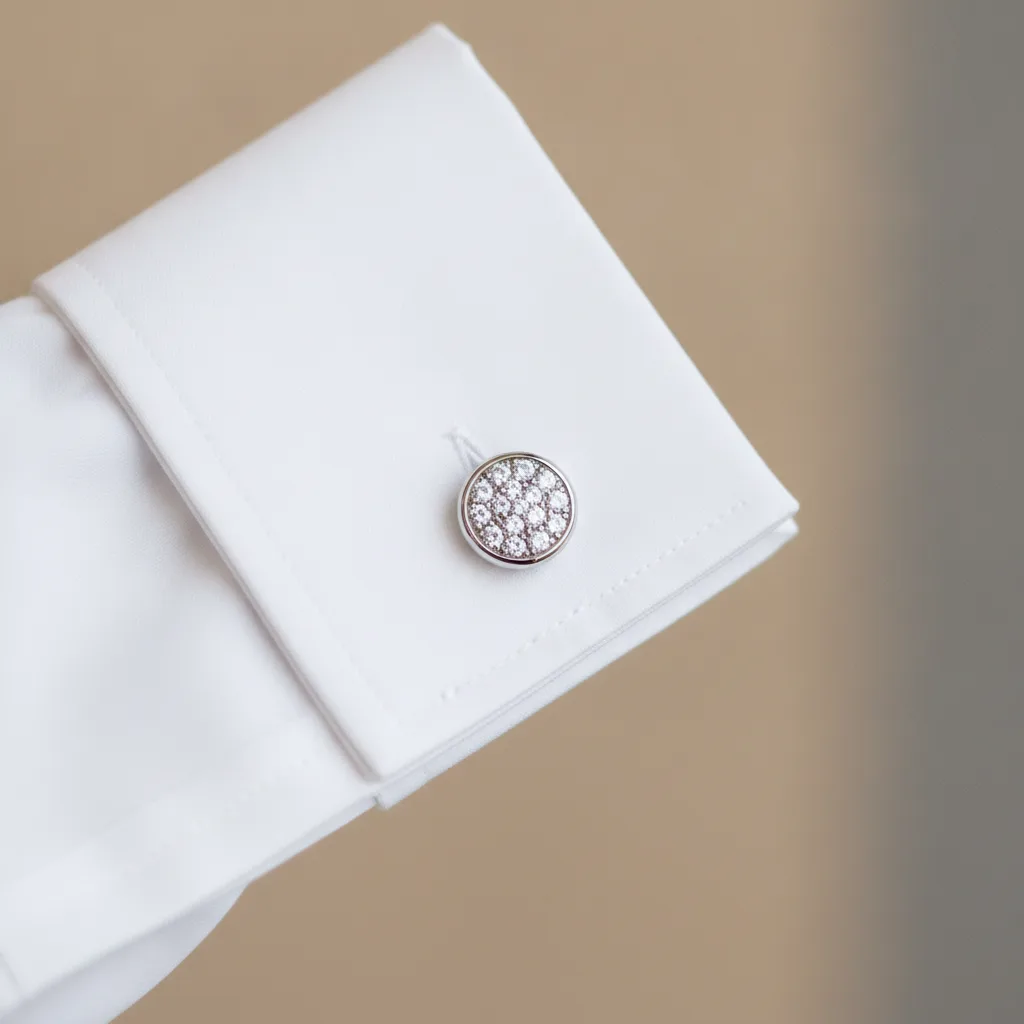
A cufflink is a decorative fastener used to close the cuffs of a shirt whose sleeves have no sewn-on buttons. The shirt is then fitted with two topstitched slits on a French cuff (a folded-back double cuff), between which the piece of jewellery is fixed.
Originally, the cufflink replaced the ribbons, cords and other fabric ties that held the sleeves closed. It thus became a genuine functional piece of jewellery. On one hand, it serves a practical purpose: closing the sleeve. On the other, it allows a man to assert a style, display a certain status, and stand out through a detail visible only to those who know to look.
Today, it's considered a male equivalent of the earring or the pendant (even though it's now also worn by women), since it sits exactly on the border between clothing and jewellery.
The origins of the cufflink's history
Before the modern cufflink
The history of the cufflink is rooted well before its current form. For centuries, shirt sleeves were simply closed with cords, ribbons, lace or silk-knot elements. These ties already served a decorative function and foreshadowed the cufflinks to come.
Some authors trace the ancestors of the cufflink back to antiquity. Similar pieces have been found near Egyptian mummies, and some point to fasteners used in the era of the Pharaohs. Other sources cite ancient Greece, where metal elements were said to have been used to close garments, later popularised across Europe between the 14th and 17th centuries.
These theories remain debated. What is agreed upon, however, is that the true modern cufflink appeared much later, in Europe, as menswear became structured around the shirt, the waistcoat and the coat.
Appearance in Europe in the early modern period
Most fashion historians agree on one key point in the cufflink's history: it was in the early 17th century that the first true buttons designed for shirt cuffs appeared in Europe. At the time, these were two small gold or silver buttons linked by a chain. They took the place of ribbons and lace, seen as impractical or too fragile.
Some sources mention early signs as far back as the 16th century, but it was in the following century that the practice took hold and the object gained visibility. The evolution of the sleeve contributed greatly to this. Cuffs, highly ornate at first, gradually simplified and took on the shapes that would give rise to the French cuff. This cuff architecture created the ideal space to host a piece of jewellery.
Royalty, nobility and a symbol of status
The kings of France and the influence of Louis XIV
It was at the French court that the history of the cufflink took on an almost political dimension. Under the kings of France, and in particular under Louis XIV, cufflinks became a symbol of refinement and power. The Sun King himself wore them, and helped make them an attribute of high society.
At Versailles, everything was a matter of display. Richly embroidered shirts ended in cuffs adorned with buttons in precious metals, sometimes set with stones. Wearing this type of jewellery was, at the time, a way of openly displaying one's wealth and belonging to the highest classes.
A sign reserved for the elite in the 17th and 18th centuries
During the 17th and 18th centuries, the cufflink was almost exclusively reserved for nobles, kings, princes and the upper bourgeoisie. The materials used (gold, silver, precious stones) were rare and expensive. Owning a collection of cufflinks meant holding tangible wealth, displayed on the wrist.
They could also signal belonging. Some gentlemen wore designs engraved with their family's coat of arms or a clan's emblem. In a highly hierarchical society, this detail instantly placed its wearer on a higher rung of the social ladder.
At the same time, shirts were evolving. By the end of the 18th century, double cuffs, attached to the shirt itself, became widespread, and it became customary to put on a clean shirt every day. The cufflink thus settled durably into the sartorial routine of men of rank.
The 19th century, the industrial revolution and democratisation
The accessory leaves the palaces
Until the mid-19th century, the history of the cufflink remained that of an aristocratic luxury. But the industrial revolution changed the game. Around 1850, production capacity increased, techniques modernised, and costs fell. Cufflinks began to be manufactured on a large scale, from cheaper metals than solid gold.
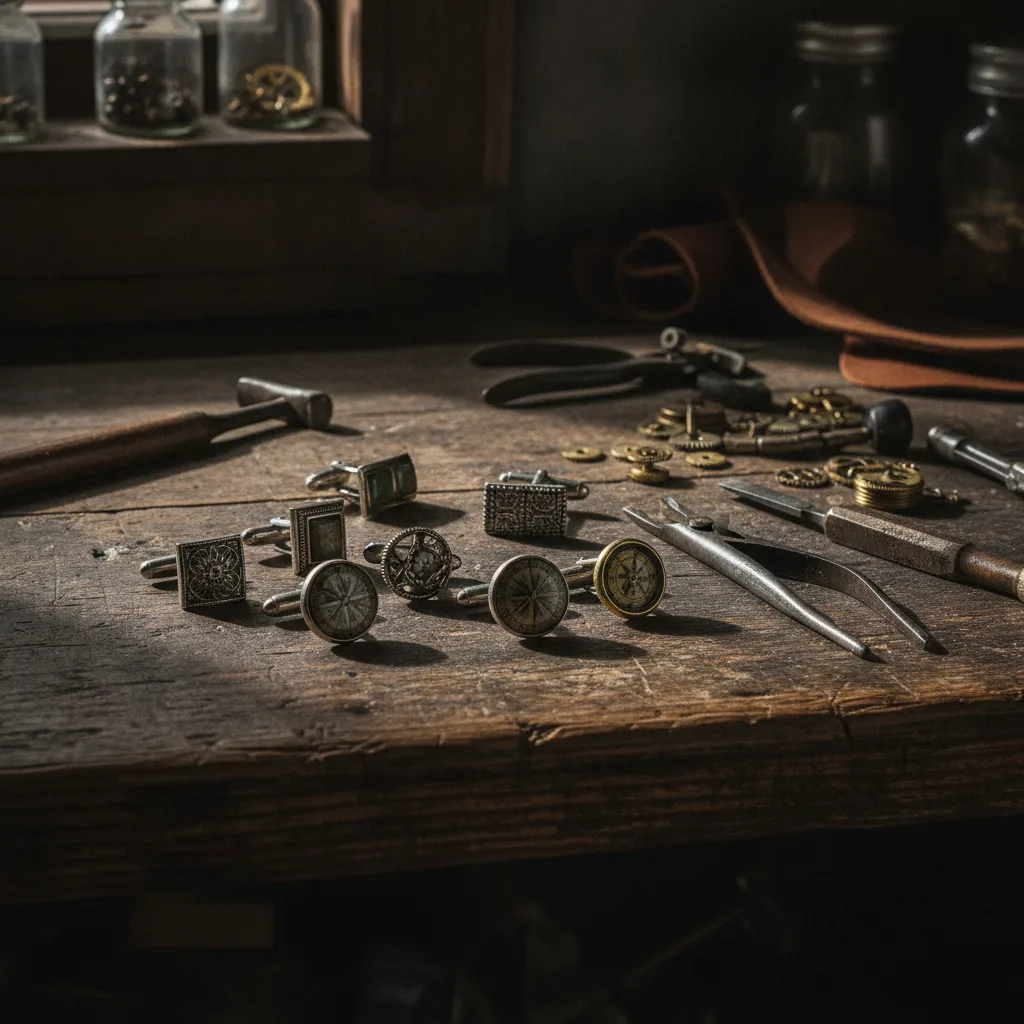
Gradually, the accessory left the sole circle of the nobility to reach the rising bourgeoisie. New designs appeared, sometimes less precious but more numerous, more varied and more accessible.
The Krementz machine and mass production
One name marks this period. In the United States, jeweller George Krementz developed a machine capable of mass-producing metal cufflinks. In 1866, he founded the company Krementz & Co, which truly industrialised this accessory.
Thanks to this kind of innovation, the cufflink became a more common consumer product. It was even repurposed as an advertising medium. Some brands stamped their logo onto it, turning this piece of jewellery into a communication tool, especially in business circles.
When literature inspires fashion
An anecdote also links the history of the cufflink to French literature. In a novel by Alexandre Dumas published in 1847, Baron Danglars appears wearing an overcoat that lets diamond-studded cufflinks peek out from beneath it. Inspired by this image, some French tailors reportedly developed double-cuff shirts, slightly visible beneath the jacket sleeve, in order to better showcase the accessory. The sleeve thus became a frame, and the cufflink, an ostentatious sign of success.
The 20th century, between peak, decline and revival
The 1920s, the golden age of the cufflink
The Roaring Twenties gave the cufflink its first modern golden age. The elegant man of the 1920s wore a three-piece suit, a French-cuff shirt, and cufflinks coordinated with his tie, money clip or cigarette case. In business and society circles, it was impossible to imagine a dressy outfit without this accessory.
Jewellery houses such as Cartier and Tiffany embraced it, creating pieces inspired by Cubism and Art Deco. Geometric shapes, sharp contrasts, and the use of precious stones and mother-of-pearl gave the cufflink the status of a small work of art.
The 1960s to 1980s, the decline of formality
From the 1960s onward, dress codes relaxed. Shirts with built-in buttons (single cuffs closed with a sewn-on button) became widespread, particularly in ready-to-wear menswear. Wearing a French-cuff shirt became less common day to day.
In the 1970s, the accessory lost more of its shine, relegated to grand ceremonies. Cufflinks were reserved for weddings, tuxedos, morning coats and a few very formal professions. The 1980s marked an almost total retirement, except in certain very conservative circles.
From the late 20th century to today, the revival
From the 1990s onward, menswear reinvented itself. Designers such as Paul Smith and Gucci reintroduced the cufflink, but this time with a dose of whimsy. Shapes played with irony and a knowing wink (bottles, footballs, pop icons). The tone became freer, less rigid.
New generations, in search of a style that's both understated and personal, rediscovered this accessory, which lets you sign an outfit without overdoing it. The cufflink is no longer confined to the tuxedo: it has made its way into the everyday wardrobe, particularly in professional settings where elegance is still valued.
Today, you can find them at every price point and in every style, from the classic steel design to the fine-jewellery piece, from minimal design to confident whimsy. It's worn by men and women alike, on contemporary shirts designed to host this discreet heir to royalty.
Modern typology and practical use
The main types of cufflinks today
| Type | Characteristics |
|---|---|
| Classic designs | Chain or swivel bar; an understated visible face (round, square or rectangular) in metal, enamel, mother-of-pearl or stone. Perfect for business or ceremony dress codes. |
| Novelty designs | Object shapes, symbols or logos. A nod to a hobby or a touch of humour, to bring character to a formal outfit. |
| Personalised designs | Engraved initials, a family crest, a date or an intimate symbol. Carry on the tradition as a mark of belonging or a personal signature. |
How to use a cufflink
1. Fold the shirt's French cuff back so as to line up the two topstitched slits.
2. Thread the cufflink's linking part (chain or post) through the outer slit, then the inner one.
3. If the mechanism has a swivel bar, straighten it to lock the cufflink and keep the cuff closed.

Cufflinks are designed for French cuffs, which have no sewn-on button. Some shirts with mixed cuffs do exist, however, letting you alternate between a sewn-on button and a cufflink as you please.
Stylistic and social meanings today
The history of the cufflink begins in social distinction and the representation of power. That legacy hasn't disappeared. Even now widely accessible, the accessory continues to evoke care for detail, respect for certain codes, and a form of refinement.
Today, it stands alongside the watch or the tie. It's a piece of jewellery that says something about the personality of the person wearing it, their relationship to tradition, their sense of style. An understated polished-metal design sends a very different message from a novelty pair inspired by pop culture.
Long a symbol of wealth, the cufflink has above all become a symbol of intent: the intent to be well dressed, to master the codes, and sometimes to have fun with them. It's both the heir to a sartorial aristocracy and a playground for contemporary elegance, whether men's or unisex.
Want to find the perfect pair? Explore our men's cufflinks, with fast delivery and free exchanges.
FAQ
Is the cufflink still reserved for formal occasions?
No. While it still suits a wedding or a tuxedo perfectly, cufflinks are increasingly seen at the office or at dressy dinners. A well-cut shirt, raw denim or chinos, and a pair of understated cufflinks create an interesting balance between casualness and elegance.
Do you absolutely need a French-cuff shirt?
To make full use of the accessory, yes. Cufflinks are designed for French cuffs (a folded-back double cuff with two slits). Some adapter designs exist for single cuffs, but the effect is less clean. Investing in one or two suitable shirts is often the best starting point.
How do you choose your cufflinks based on your style?
If you're just starting out, begin with a classic pair in silver- or gold-tone metal, possibly with a mother-of-pearl or plain-enamel insert. It will go with most suits. Then introduce more personal designs (engraved, coloured or novelty) to reflect your passions or match the tone of a particular event.
From the court of Louis XIV to today's offices, the history of the cufflink always tells the same story: this small piece of jewellery has always served to set apart those who value attention to detail. Today, it's no longer reserved for an elite, but remains a sign of sartorial culture and personality. If you'd like to carry on this tradition in your own way, and explore designs built for lovers of elegance, discover the Une Autre Paire De Manche collections at Une Autre Paire de Manches — and, why not, write the next chapter of this story on your own wrist.