

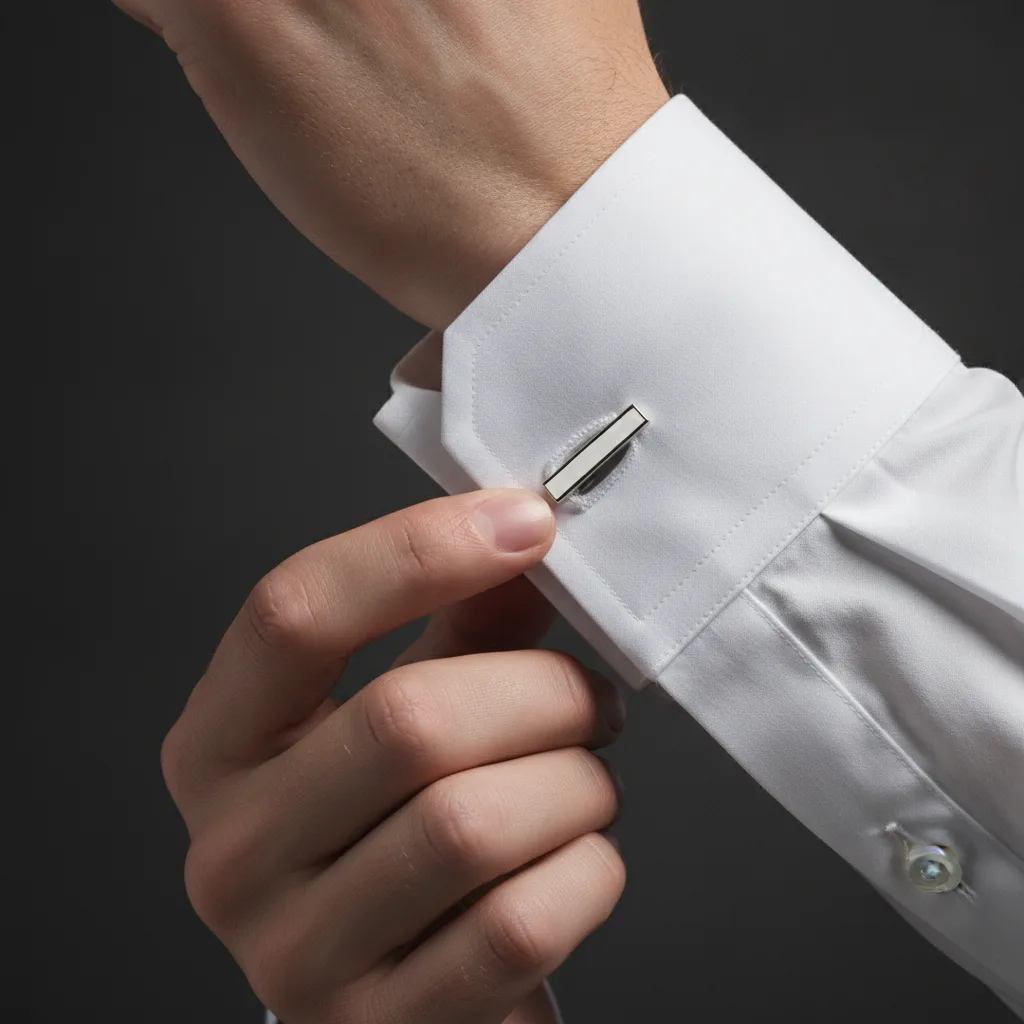
Cufflinks are one of those men's accessories that impress at first glance, but can seem intimidating to use for the first time. Yet knowing how to put on cufflinks is much simpler than it looks: you just need the right moves and the right shirt to start with. Whether you're a beginner or simply looking to speed things up, this practical guide takes you through it step by step, mechanism type by mechanism type.
How to Put On Cufflinks in 30 Seconds: The Illustrated Guide
Reading time: ~6 min
- Which shirt to wear cufflinks with?
- Step-by-step tutorial for French cuffs
- How to fit each type of cufflink
- Wearing cufflinks with a single-cuff shirt
- When and how to wear them
- Do's and don'ts
- FAQ
- Putting on cufflinks made simple
Which shirt to wear cufflinks with?
Before even thinking about technique, you need to make sure you're wearing the right shirt. Not every shirt is compatible straight away.

Shirts with French cuffs
The ideal shirt is one with a French cuff (also known as a double cuff). This type of cuff is easy to spot: it's longer than usual, folds back on itself and has four buttonholes, with no sewn-on button at all. It's precisely this design that lets it take a cufflink properly.
Shirts with single cuffs
Shirts with single cuffs (the most common type found in shops) can also be adapted. You can overlap the two edges of the cuff, lining up the existing holes, then slide a cufflink through for a more casual effect. For a truly polished result, a tailor can remove the ordinary button and add an extra buttonhole to recreate the double-cuff principle.
Step-by-step tutorial for French cuffs
Here's the standard method, the one you'll use in the vast majority of situations.
Steps for putting on cufflinks with French cuffs
Step 1. Fully unfold your shirt sleeve. The French cuff should lie completely flat, with no folds.
Step 2. Fold the cuff back on itself to create a double thickness. You should see the four buttonholes stacked, two on each side.
Step 3. Carefully line up the buttonholes so all four holes match up perfectly. Poor alignment is the number one cause of trouble.
Step 4. Hold the cufflink vertically (with the post in line with the opening) and slide it through the first two layers of fabric.
Step 5. Continue through the remaining two layers, for four layers in total.
Step 6. Rotate or straighten the closure mechanism to lock everything in place and keep the cuff closed.
Step 7. Repeat on the other cuff.
Summary in 3 moves: line up the edges of the cuff, insert the post through the four holes, lock the mechanism.
How to fit each type of cufflink
The closure mechanism varies depending on the design you choose. Here's how to proceed for each type.
Swivel-head cufflink (fish-tail or whale-back)
This is the most common type. Hold the swivel head vertically, in line with the post, to make it easier to pass through the buttonholes. Once inserted, turn the head back to horizontal to lock it.
Stud cufflink (bullet back or torpedo)
Tilt the lower part 90 degrees relative to the opening, pass it through the buttonholes, then straighten it back up to lock it in place.
Chain cufflink
Insert one of the two decorative faces into the hole without forcing it, then straighten everything so both faces hold the cuff in place on either side.
Ball-back cufflink
Tilt and push the smaller part through the openings, then straighten everything so the ball sits flat against the fabric.
Double-action (snap) cufflink
Lay the cufflink flat, pass it through the openings, then open out the closure mechanism to lock it.
Wearing cufflinks with a single-cuff shirt
This technique suits anyone wanting a slightly more casual style, or who doesn't yet own a double-cuff shirt.

Overlap the two edges of the cuff, adjusting the fit so the holes line up. If the shirt has a single hole on each side, check that they face each other exactly. Then insert the cufflink exactly as you would with a French cuff. The result is visually less structured, but perfectly acceptable in a semi-formal setting.
To take it further, a tailor can add an extra buttonhole on each edge to faithfully recreate the double-cuff principle. This alteration is quick and inexpensive.
When and how to wear them
Formal occasions
Cufflinks naturally pair with dressy occasions: weddings, ceremonies, business dinners, black-tie evenings. They add an immediately visible touch of sophistication and signal real care taken over the outfit.
Everyday wear and coordinating accessories
In everyday professional settings, they can quite happily be worn with a classic suit or a structured blazer, as long as you stick to understated designs (silver or gold-tone metal, a simple geometric shape).
The golden rule is coordination. Your cufflinks should harmonise with the other metal accessories in your outfit: belt buckle, watch, tie pin. A consistent set in terms of colour and finish (matte, glossy, brushed) looks far more elegant than a random mix of pieces.
Do's and don'ts

| Do | Don't |
|---|---|
| Check the alignment of all 4 buttonholes | Force it through thick fabric in one go |
| Insert the cufflink hole by hole if the fabric is stiff | Use a shirt without suitable buttonholes |
| Coordinate the metal with your watch or belt | Mix different finishes (gold and silver) |
| Iron the French cuff before folding it | Neglect maintaining the mechanism |
FAQ
Can you wear cufflinks with any shirt?
Not directly. Shirts with French cuffs are designed for this and give the best result. On a classic shirt with single cuffs, you can overlap the edges by lining up the existing buttonholes, but the result is less structured. For a lasting, polished result, a tailor can adapt the shirt by adding an extra buttonhole.
What if the cufflink won't go through all the layers of fabric?
If the fabric is thick or stiff, don't force it. The technique is to work the cufflink through one layer at a time rather than trying to push through everything in a single motion. Also make sure all four buttonholes are perfectly aligned before you start.
How do you look after cufflinks so they last?
Avoid prolonged contact with water, sweat or cosmetic products (perfume, gel). Store them in a box or a case to prevent knocks and scratches. For metal designs, a soft cloth is enough to bring back their original shine. Regularly check that the swivel mechanism hasn't seized up or worn out.
Putting on cufflinks made simple
Mastering the technique for putting on cufflinks only takes a few minutes of practice. Once you've got the moves down, it really does take less than thirty seconds per cuff. The key is to start with the right shirt, line up the buttonholes properly, and choose a mechanism that suits your comfort level. To discover a selection of cufflinks for every occasion and every style, visit Une Autre Paire de Manches, the shop dedicated to men's accessories.