

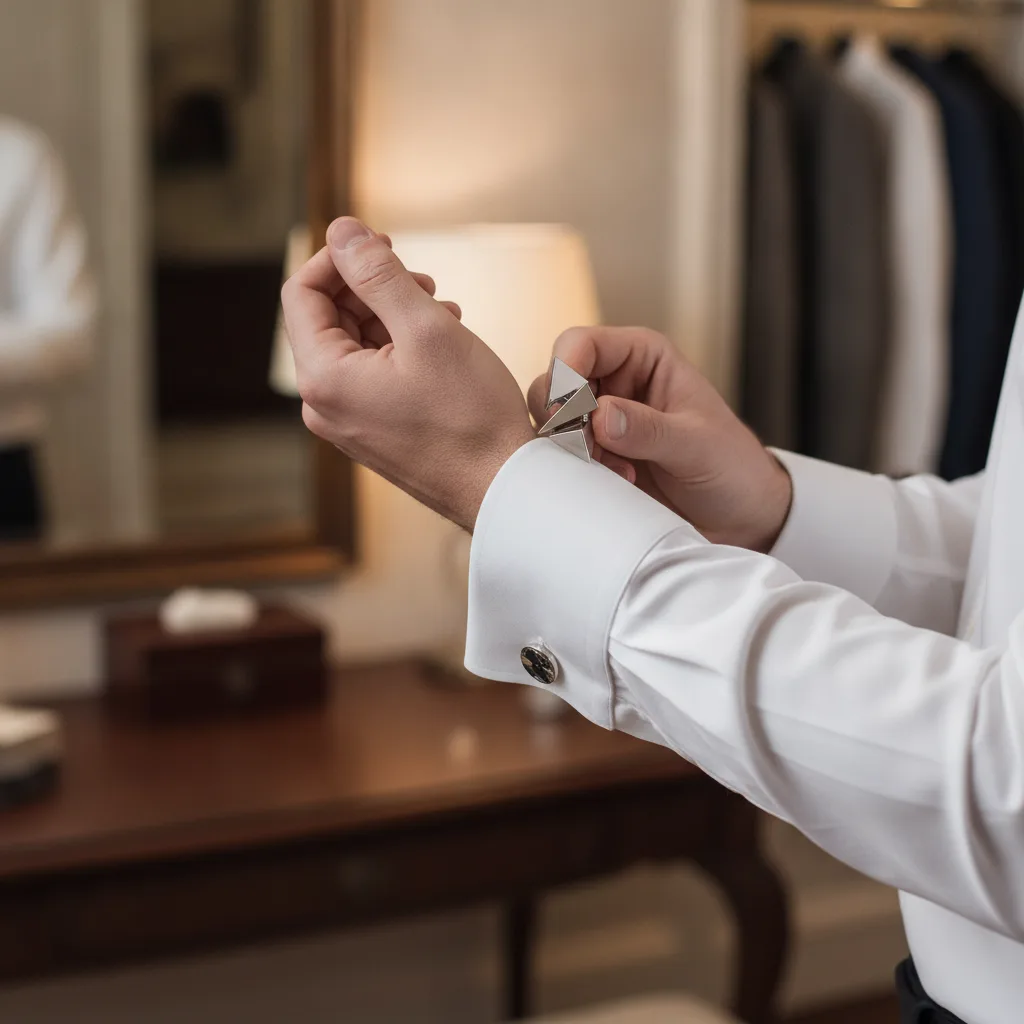
Asymmetry is now finding its way into the most discreet details of the men's wardrobe, and the shirt cuff is its subtlest stage. Asymmetric cufflinks break away from the well-behaved roundness of the traditional design to introduce an off-centre line, a sharp angle, and sometimes two different decorative faces.
Far from being a catwalk whim, this trend belongs to an architectural school of jewellery that appeals to men used to wearing suits and keen to put their signature on their silhouette in a different way. At Une Autre Paire de Manches, we follow this development closely, because it changes the way you choose, wear and match a suit accessory. This guide gives you the technical and stylistic pointers to take the plunge without a false note.
Asymmetric Cufflinks: A Modern Style Guide
Reading time: ~8 min
- What are asymmetric cufflinks?
- Asymmetric or mismatched pair: a confusion to avoid
- The main families of designer cufflinks
- Which shirt to wear with asymmetric cufflinks
- How to orient the design and stop it turning
- Wedding, office, evening: when to wear them
- Materials, durability and care
- Going further with asymmetric cufflinks
- Key points to remember
- Frequently asked questions about asymmetric cufflinks
What are asymmetric cufflinks?
A cufflink joins the two sides of a shirt cuff in place of a sewn-on button, which requires a double buttonhole, the hallmark of the French cuff. A design is called asymmetric when its shape, pattern or construction breaks with the classic balance of the circle, the square or the oval. This can take the form of an off-centre motif, an irregular geometric silhouette, layered volumes or two distinct decorative faces on either side of the cuff. Visual asymmetry then becomes the very subject of the piece, rather than a mere added ornament.
This approach follows in the tradition of modernist jewellery, where open angles, lozenges and offset rectangles replace decorative symmetry. Designers featured on collectible jewellery platforms such as 1stDibs offer 18-carat gold cufflinks built around 90-degree angles and deliberately unbalanced volumes. The result is never flashy; it is graphic.
Asymmetric or mismatched pair: a confusion to avoid
This is the nuance that the most successful original cufflinks always respect. An asymmetric pair is still a coherent pair: the two pieces share the same visual language and can be identical or designed as mirror images. A mismatched pair, on the other hand, combines two deliberately different pieces, by colour, material or motif, in a spirit of confident contrast.
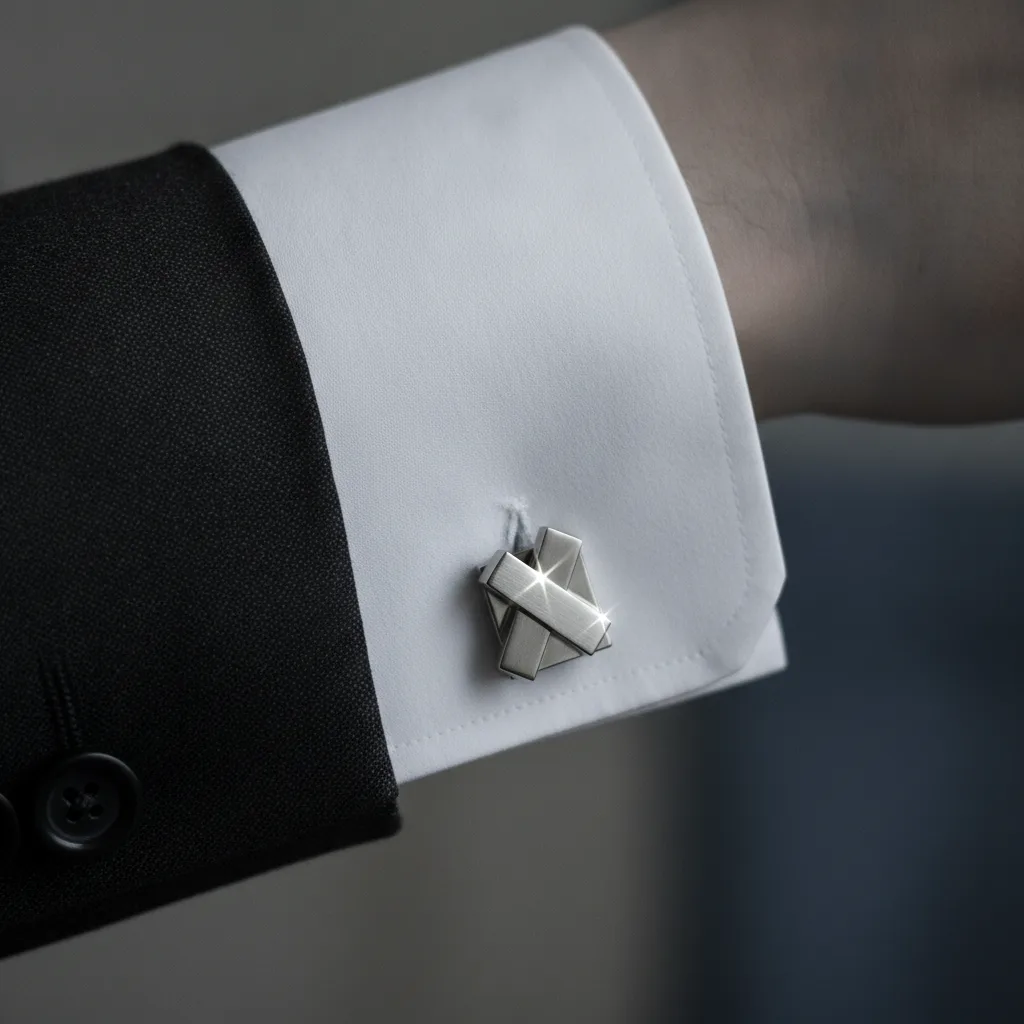
Both approaches are legitimate, but they do not produce the same effect and are not suited to the same occasions. Before buying, the product page should state whether the two pieces are identical, mirrored or distinct.
| Criterion | Classic cufflink | Asymmetric cufflink |
|---|---|---|
| Shape | Round, square, oval, regular | Irregular, off-centre, geometric |
| Relationship between the two pieces | Two identical pieces | Identical, mirrored or deliberately different |
| Stylistic register | Formal, discreet, traditional | Contemporary, artistic, avant-garde |
| Ease of pairing | Instant with any formal outfit | Requires colour consistency with shirt and jacket |
| Point to watch | Choice of metal | Orientation of the design and visual balance |
The main families of designer cufflinks
Asymmetric geometric designs
Geometric designs are the most accessible way in. Slanted bars, offset rectangles, elongated lozenges or open angles: these geometric cufflinks give structure to the cuff and go perfectly with fitted jackets. Specialist style guides point out that a geometric or asymmetric design adds a modern note to a slim cut, whereas round shapes soften a very formal outfit.
Off-centre motifs, double faces and layered volumes
Next come designs with an off-centre motif, whose silhouette remains regular but whose decoration, whether a stone, jewellery enamel or a metal line, shifts to one side. This is the most discreet form of asymmetry, and therefore the easiest to wear at the office. Double-faced designs, meanwhile, abandon the simple fastening to offer a motif that is visible on both the inside and the outside of the cuff.
Vintage cufflinks and contrasting materials
Finally, vintage asymmetric cufflinks, often from the modernist output of the 1950s and 1960s, combine sterling silver and black enamel in curved and rectangular shapes, such as those found from specialist sellers on Etsy. Contemporary jewellery houses such as John Hardy or Montblanc occupy the luxury men's jewellery segment, with sculpted volumes and meticulous finishes.
Asymmetry can also come from contrasting materials rather than shape. Combining a matt and a polished finish, a cool metal and a dark stone, or gold plating and deep enamel creates visual tension without distorting the silhouette of the piece. You will find these stylistic choices in our collections sorted by shape and by colour.
Which shirt to wear with asymmetric cufflinks
Choosing a compatible shirt
The question is first and foremost a technical one. You need cufflinks for a shirt with French cuffs, that is, a shirt whose cuff folds back and has a buttonhole on each side, with no sewn-on button. Fold the cuff back, line up the four layers of fabric, pass the rigid post through, then lock the swivel fastening or the chain link. The decorative face should end up on the outside, visible when your arm hangs naturally by your side.
Matching colours and metals
When it comes to colour, the logic remains one of colour consistency. Silver works with white, light blue, grey and black. Yellow gold goes with ecru tones, navy and deep green. Dark enamel accompanies a grey, black or midnight blue suit. If the asymmetric design is already strongly pronounced, avoid layering several highly visible metals across your watch, belt buckle and jewellery.
Good to know
A shirt with French cuffs cannot take every size of piece. The wider the face of the cufflink, the shorter the post should be so that the fabric does not gape.
How to orient the design and stop it turning
This is the defining feature of the genre. On a mirrored pair, orient both pieces in the same way relative to your body, point upwards or angle outwards, to create a clear rhythm. An off-centre motif must be positioned so that the decoration does not tip under the wrist, which would cancel out the whole point of the design. Test the orientation in front of a mirror before fully closing the fastening, especially with a sculptural design.

For stability, three factors really matter. They are worth checking before you buy.
- A secure fastening, swivel or bar type, which stops the piece rotating on the fabric.
- A post suited to the thickness of the cuff, neither too long nor too short.
- A controlled weight, because an overly heavy face pulls on the cuff and always ends up swivelling.
Wedding, office, evening: when to wear them
Formal and informal settings
At work, a sober asymmetric design passes without difficulty, provided it stays modest in size, relief and number of colours. A clean geometric shape in silver or modern steel adds a personal signature without breaking the dress code. For a wedding, asymmetric cufflinks for ceremonial dress should be chosen according to the level of formality. A very traditional ceremony calls for discreet asymmetry, whereas a contemporary wedding allows a sculptural piece that becomes the main accent of the outfit. In the evening, precious metals, dark enamel and stones work remarkably well, as long as the size of the piece remains compatible with the cuff.
Choosing your first asymmetric design
The answer to the most frequent question is therefore yes: a classic suit is perfectly compatible with these modern cufflinks. A plain design of reasonable size modernises a navy or grey two-piece without altering its formal character. Very bulky or multicoloured versions are better suited to contemporary silhouettes and an avant-garde style. For a first try, our best sellers and new arrivals strike a good balance between boldness and wearability, as do our silk knots for a soft and colourful alternative.
Materials, durability and care
Choosing durable materials
To choose original cufflinks that are built to last, always distinguish solid metal from mere plating. Sterling silver and stainless steel offer excellent longevity, gold plating needs more care against rubbing, and enamel and stones are mainly vulnerable to knocks. Asymmetric silver cufflinks develop a patina over time, which is part of their charm, but they require regular jewellery care.
Everyday storage and care
Montblanc recommends keeping each pair separately, ideally in a padded box, to limit scratches, using a soft cloth for light marks and a soft brush for hard-to-reach areas. Avoid abrasive products and prolonged contact with water and perfume, and take your cufflinks off before any physical activity. Our gift sets follow this same logic of protective storage.
Key takeaway
Before buying online, always check the returns policy, the cancellation period and any exclusions for personalised pieces, as these terms vary from one seller to another.
Going further with asymmetric cufflinks
Asymmetry is not a passing eccentricity; it is a contemporary way of thinking about the suit accessory. It simply requires a little more attention than the classic design, regarding compatibility with the shirt, the orientation of the motif and the quality of the fastening.
Once you have mastered these pointers, an off-centre cufflink becomes the most personal detail of a formal outfit. It is up to you to choose between the discretion of an offset motif and the statement of a frankly architectural shape.
Key points to remember about asymmetric cufflinks
Asymmetric cufflinks fit easily into a smart wardrobe as long as the shirt, the size of the piece and the orientation of the motif are well handled. By favouring durable materials, a reliable fastening and colours that work with your suit, you get a graphic accessory that stays elegant in every setting, from the office to the ceremony.
FAQ – Frequently asked questions about asymmetric cufflinks
Can a standard shirt be altered to take asymmetric cufflinks?
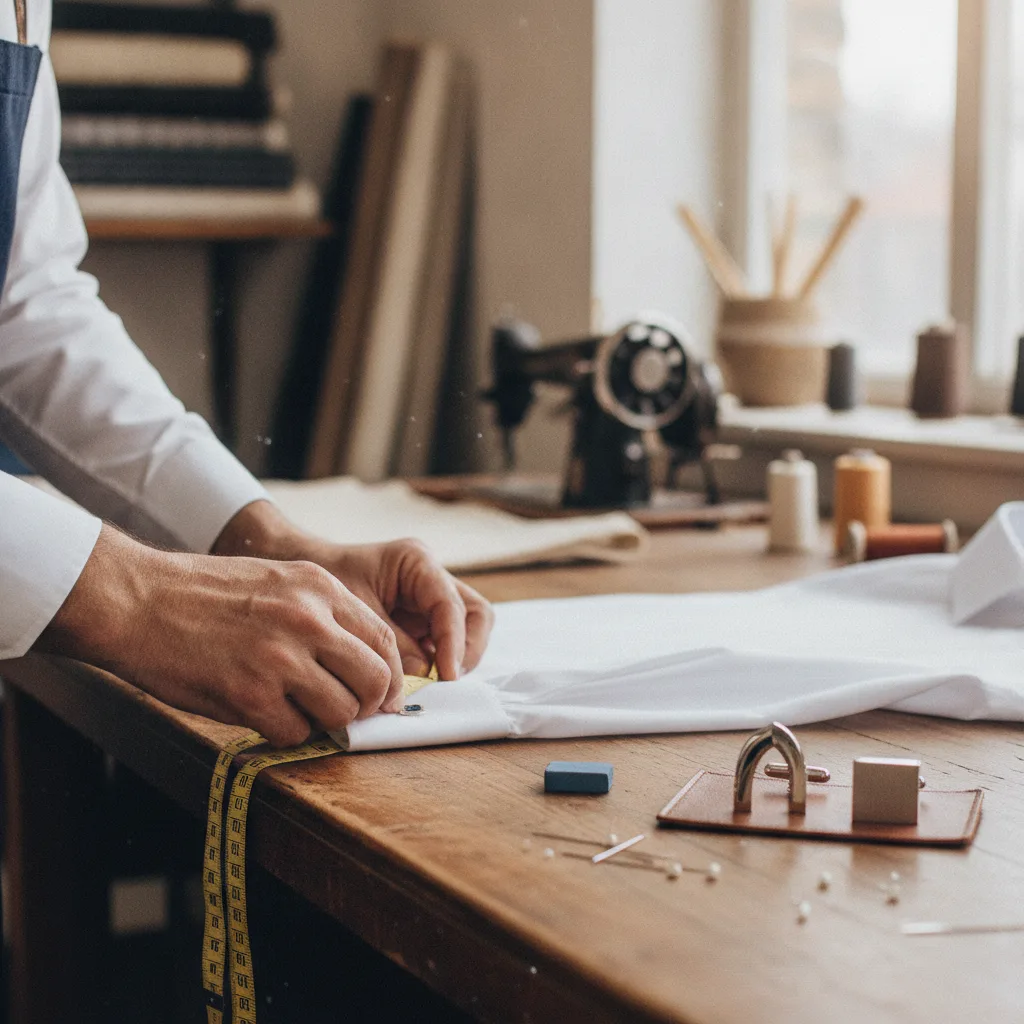
Yes, a tailor can open a second buttonhole on a single cuff, but the result is less crisp than an original French cuff. For a statement piece of jewellery, it is better to start with a shirt designed for the purpose.
Are asymmetric cufflinks just for men?
No. Anyone wearing a shirt with compatible cuffs can adopt them. Whether they suit depends on the cut of the shirt and the overall balance of the outfit, not on gender.
What face size should you choose for a first design?
A face in proportion to the cuff, one that does not extend beyond the width of the folded cuff, remains the safest choice. A piece that overhangs catches on the jacket sleeve and keeps shifting.
Is a mirrored pair harder to wear than an identical pair?
Not really, but you must not swap the pieces between the two cuffs. Note a distinctive detail when you put them away so that you can instantly find the right side.
How do you match asymmetric cufflinks with a tie clip?
Go for a single strong accent. If the cufflink is sculptural, choose a smooth, neutral tie clip in the same metal to preserve the visual balance of the silhouette.